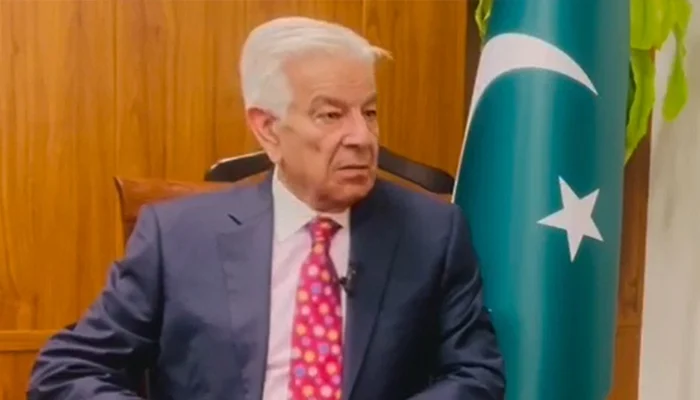
ISLAMABAD: Defence Minister Khawaja Asif said on Monday that any expansion of the existing Pakistan-Saudi Arabia defence agreement — including the possible inclusion of Turkiye or other states — would be made only through mutual consent between Islamabad and Riyadh.
Speaking exclusively to Geo News at Parliament House, Asif stressed that no country could be added to the pact unless both Pakistan and Saudi Arabia agreed. “Turkiye or any other country could join the arrangement if both sides concur,” he said.
His remarks came days after Defence Production Minister Raza Hayat Harraj told Reuters that Pakistan, Saudi Arabia and Turkiye had prepared a draft trilateral defence agreement following nearly a year of negotiations. Harraj clarified that the proposed trilateral framework was separate from the bilateral Strategic Mutual Defence Agreement (SMDA) signed between Islamabad and Riyadh last year, and that final approval would require consensus among all three countries.
Earlier reports by Bloomberg suggested that Turkiye was in advanced talks to join the Pakistan-Saudi SMDA, describing the move as a potential shift in the regional security landscape. However, Pakistani officials have maintained that the trilateral draft is distinct from the bilateral pact.
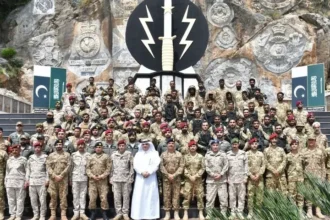
Pakistan and Turkiye already share long-standing military cooperation. Ankara has built corvette warships for the Pakistan Navy, upgraded Pakistani F-16 jets, and supplied drone technology to Islamabad in recent years.
Call for collective Muslim defence framework
Asif urged Muslim-majority nations to move towards a broader collective security arrangement, warning that fragmented defence strategies made them vulnerable. He argued that a joint framework could prevent individual states from being isolated or weakened.
Gaza peace efforts welcomed
Commenting on international developments, the defence minister described US President Donald Trump’s reported invitation to Prime Minister Shehbaz Sharif to participate in Gaza peace efforts as a “positive step.”
He reaffirmed Pakistan’s support for a two-state solution and said Islamabad was well-positioned to contribute constructively to any future peace roadmap for Gaza. Asif termed the moment a “golden opportunity” for Pakistan to advocate strongly for Palestinian rights on the global stage.
Relations with Iran and views on Israel
Addressing regional security concerns, Asif described Iran as a close neighbour and “brotherly” nation with which Pakistan enjoys strong relations. He said Tehran posed no threat to others and emphasised that Pakistan consistently supports Iran’s security and stability.
At the same time, he noted that many countries view Israel as a security threat in the region.