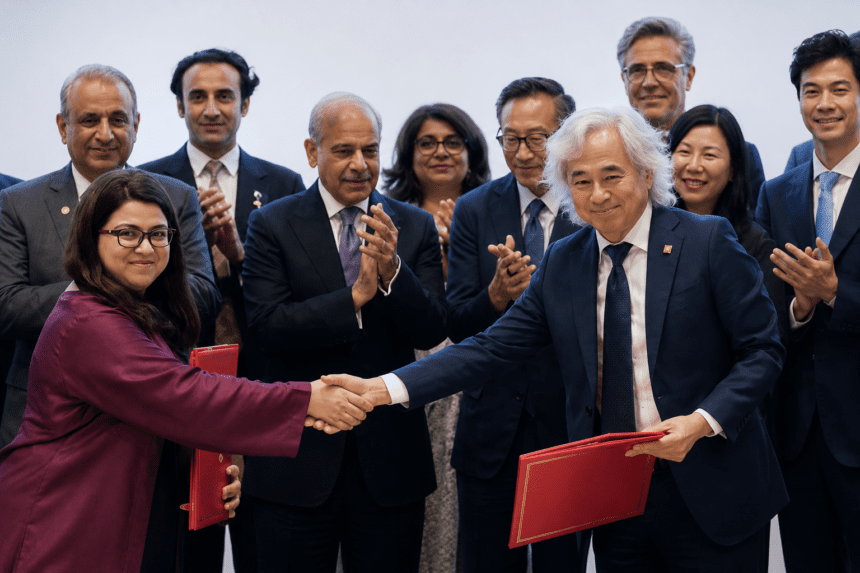
Hangzhou, May 24: Pakistan’s Small and Medium Enterprises Development Authority has signed a memorandum of understanding with Alibaba Group to promote digital trade and help Pakistani small and medium-sized businesses reach international markets.
The MoU was signed in China in the presence of Special Assistant to the Prime Minister on Industries and Production Haroon Akhtar Khan. According to Pakistan’s Press Information Department, the agreement is aimed at expanding global market access for Pakistani SMEs and strengthening the country’s digital economy.
Speaking at the signing ceremony, Haroon Akhtar Khan said the government was working on the digital transformation of the SME sector in line with Prime Minister Shehbaz Sharif’s vision. He said linking Pakistani businesses with international buyers through e-commerce platforms had become a key priority for the government.
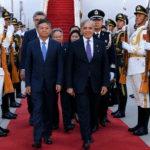
The deal comes during Prime Minister Shehbaz Sharif’s four-day official visit to China, which began on May 23 and will continue until May 26. The visit opened in Hangzhou, where the prime minister chaired a Pakistan-China business-to-business investment conference focused on IT and telecom, battery energy storage systems and agriculture.
For Pakistan, the Alibaba partnership is not just another ceremonial signing. The country’s small businesses often struggle with weak branding, limited export channels, payment issues, logistics gaps and lack of knowledge about global compliance standards. Access to Alibaba’s digital trade ecosystem could help more Pakistani firms list products, connect with buyers, and understand what international markets actually demand.
The focus on SMEs is important because they form a large part of Pakistan’s business base but remain underrepresented in formal exports. Officials hope that e-commerce platforms can give smaller firms a route into foreign markets without requiring the same physical presence, marketing budgets or distribution networks that larger exporters usually have.
Alibaba has worked with Pakistani institutions before. In September 2025, Alibaba.com signed an MoU with Ignite — National Technology Fund, under the Ministry of IT and Telecommunication — to support digital trade, SMEs and startups.
The latest SMEDA-Alibaba agreement builds on that earlier engagement, but with a sharper focus on small and medium enterprises linked to Pakistan’s industrial and production base. That makes the follow-through crucial. Training, product quality, packaging, reliable shipping and digital payments will decide whether Pakistani sellers can turn access to a global platform into actual export orders.
Prime Minister Shehbaz is also scheduled to visit Alibaba Group’s headquarters in Hangzhou, where cooperation agreements between Alibaba and the Pakistani government were expected to be signed, according to the Prime Minister’s Office cited by Arab News Pakistan.
The wider message from Islamabad is clear: Pakistan wants Chinese technology firms to play a bigger role in its next phase of economic growth. Alongside CPEC Phase II, the government is pitching investment in IT, agriculture, industrial zones, minerals and digital trade as areas where Pakistan and China can move from infrastructure cooperation toward business-led growth.
The real test, though, will come after the delegation leaves China. Pakistani SMEs will need practical onboarding, export-readiness support and smoother domestic systems. Without that, a platform partnership can stay on paper. With it, the Alibaba MoU could give many small exporters something they badly need: a direct window to the world.