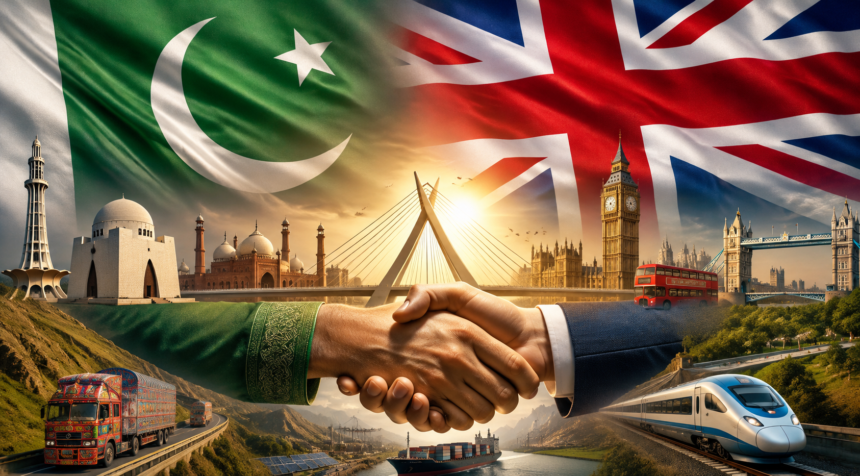
ISLAMABAD, May 21 — Pakistan and the United Kingdom have reviewed key areas of bilateral cooperation, with both sides signaling interest in deeper engagement on security, trade, investment and economic reform.
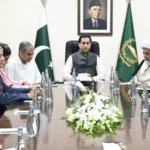
The discussion took place during a meeting between Prime Minister Shehbaz Sharif and UK National Security Adviser Jonathan Powell at the Prime Minister House in Islamabad. Deputy Prime Minister and Foreign Minister Ishaq Dar, Special Assistant to the Prime Minister Tariq Fatemi, Foreign Secretary Amna Baloch and Secretary National Security Division Sajid Baloch were also present.
According to official accounts, Shehbaz described the United Kingdom as a longstanding strategic partner and said Pakistan wanted “robust and forward-looking engagement” with London. The prime minister also recalled his recent telephone conversation with British Prime Minister Keir Starmer, where the two leaders had expressed a shared desire to strengthen relations.
The meeting was not just ceremonial. Security and regional diplomacy appeared to sit high on the agenda, with Powell appreciating Pakistan’s role in efforts aimed at dialogue and de-escalation in the wider region. That matters, frankly, because Islamabad has been trying to present itself as a stabilizing player at a time when tensions in South Asia and the broader Middle East remain closely watched by Western capitals.
Powell also congratulated Pakistan’s government on its economic reform efforts and expressed the UK’s interest in expanding cooperation in security, trade, investment and development. For Islamabad, that endorsement comes at a useful moment. The government has been pushing a reform-heavy economic message abroad, hoping to turn signs of stabilization into fresh investment and stronger market confidence.
Economic reform has become a central part of Pakistan’s foreign-policy pitch. Earlier this month, the International Monetary Fund completed its latest review of Pakistan’s programme, clearing the way for fresh financing under the Extended Fund Facility and the Resilience and Sustainability Facility. The IMF programme remains tied to difficult reforms, including revenue measures, energy-sector fixes and efforts to strengthen macroeconomic stability.
Trade is another obvious pillar of the relationship. Britain and Pakistan already maintain strong commercial, educational and people-to-people links, helped by a large Pakistani diaspora in the UK. In 2025, the two countries launched a structured Trade Dialogue and agreed to establish a UK-Pakistan Business Advisory Council, with bilateral trade then valued at about £4.7 billion.
The latest contact suggests both governments want to keep the relationship practical rather than merely symbolic. For Pakistan, closer UK cooperation could support investment, trade access and reform credibility. For Britain, Pakistan remains a country with strategic weight: nuclear-armed, regionally influential, economically challenged but too important to ignore.
No major new agreement was announced after the meeting, but officials on both sides framed the talks as part of an ongoing effort to widen cooperation. The next test will be whether these conversations lead to concrete movement — more trade, more investment, stronger security coordination and support for reforms that ordinary Pakistanis can actually feel.