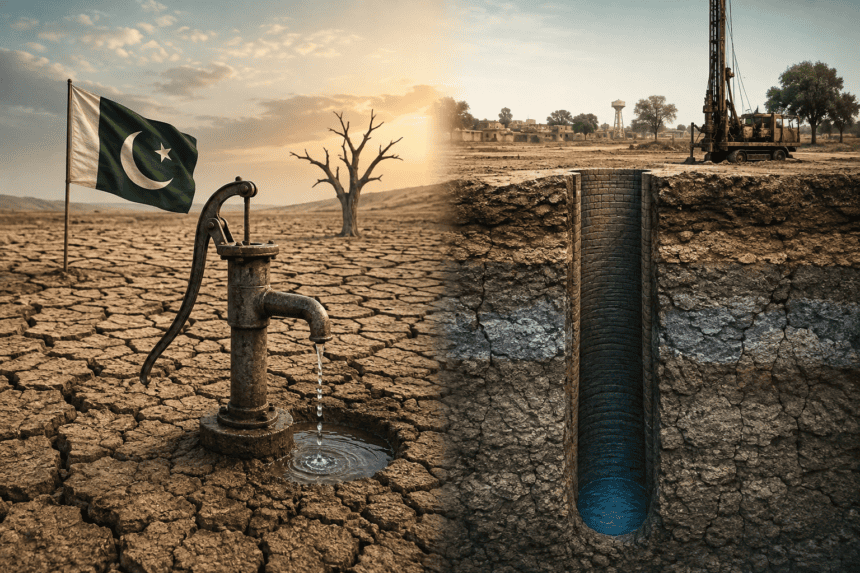
Pakistan is running out of water. Underground aquifers—the country’s final safety net—are depleting at a rate that scientists now label “unsustainable.” In major urban centers like Lahore and Karachi, the water table has plummeted to record depths, leaving millions reliant on increasingly unreliable and often contaminated municipal supplies.
The crisis isn’t coming; it’s already here. For decades, the country relied on aggressive groundwater extraction to fuel its agricultural sector and sustain a ballooning urban population. Now, the math has caught up. The extraction rate far exceeds natural recharge, turning once-reliable wells into dry pits.
“We have treated groundwater like an infinite bank account,” said one senior hydrologist familiar with recent federal data. “We’ve been overdrawing for years, and now the balance is effectively zero.”
The consequences are visible in the soil. In the breadbasket of Punjab, sinking water tables have forced farmers to install deeper, more expensive pumps, pushing small-scale growers into debt. Meanwhile, the drop in pressure is causing saltwater intrusion in coastal areas, effectively poisoning the land for future agriculture. In the cities, the situation is a public health disaster in the making. As the water table drops, the quality of what remains deteriorates; heavy metals and toxic seepage are increasingly turning up in household taps.
Despite the warnings, the government’s response remains largely reactive. While provincial authorities have occasionally floated the idea of “water taxes” or stricter licensing for tube wells, political pushback from the agricultural lobby has ensured that reform remains stalled. Enforcement of existing laws is virtually non-existent, leaving the sector wide open for unregulated drilling.
Climate change is accelerating the collapse. Erratic monsoon patterns mean less water is soaking into the ground, while record-breaking heat waves drive up demand for irrigation and domestic use. The natural cycle that once replenished these aquifers has been broken by deforestation and urban sprawl, which prevents rainwater from filtering into the earth.
Pakistan now faces a stark choice: regulate the extraction of its most vital resource, or watch the taps run dry for good. The luxury of ignoring the data has evaporated along with the water.