
US administration officials acknowledged in closed-door briefings with Congress that there was no intelligence indicating Iran planned to attack American forces first, according to sources familiar with the discussions.
The briefings, held on Sunday for both Democratic and Republican congressional staff, lasted over 90 minutes and focused on the ongoing US military campaign against Iran.
Intelligence and Justification
Despite earlier public statements suggesting Iran posed an imminent threat, officials reportedly clarified that while Iran’s ballistic missile capabilities and regional proxy forces were considered dangerous, there was no specific intelligence showing Tehran intended to strike US forces preemptively.
President Donald Trump had previously argued that Iran was close to developing the capability to launch ballistic missile attacks against the United States. However, sources familiar with intelligence assessments said such claims were not fully supported by existing intelligence reports.
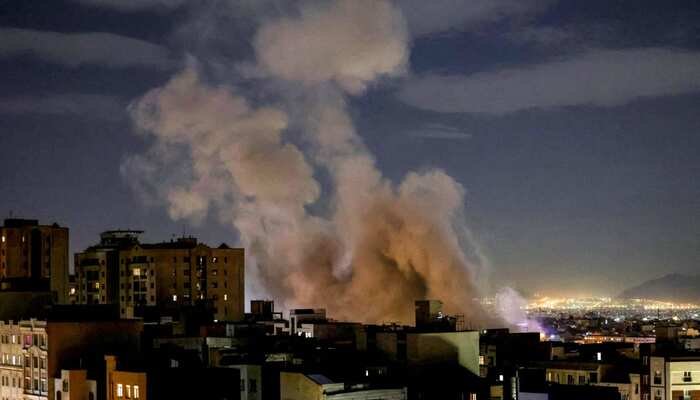
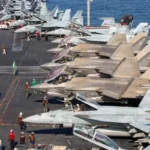
The US military campaign, launched in coordination with Israel, has targeted more than 1,000 Iranian sites, including missile facilities and military assets. Officials say the objective is to prevent Iran from acquiring nuclear weapons, degrade its missile program, and neutralize threats to US interests and allies.
Casualties Reported
US Central Command confirmed that three American service members were killed and several others wounded in the conflict. Additional troops sustained minor injuries.
Political Backlash
Democratic lawmakers have criticized the operation, describing it as a “war of choice” and questioning the administration’s justification for abandoning diplomatic efforts. Mediators had previously indicated that negotiations still held potential.
Regime Change Debate
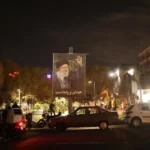
Following the reported death of Iran’s Supreme Leader, Ayatollah Ali Khamenei, discussions within US intelligence circles have centered on whether the strikes could lead to regime change.
Multiple officials expressed skepticism that Iran’s opposition groups could topple the government in the near term. Intelligence assessments suggest that if leadership changes occur, power may shift to hardline factions within the Islamic Revolutionary Guard Corps or conservative clerical leadership rather than moderate forces.
US officials also debated whether leadership changes would significantly alter Iran’s nuclear negotiations or military posture.
Internal and Regional Uncertainty
Iranian officials announced that a temporary leadership council has assumed responsibilities amid the crisis. Meanwhile, security officials in Tehran accused the US and Israel of attempting to destabilize the country.
Within Washington, there remains ongoing debate but little consensus about the long-term impact of the strikes — particularly regarding Iran’s political stability and future negotiations.
Public Opinion Divided
A recent Reuters/Ipsos poll found that 27% of Americans approved of the strikes, 43% disapproved, and 29% were uncertain.
As military operations continue, the broader consequences for regional stability and diplomatic engagement remain unclear