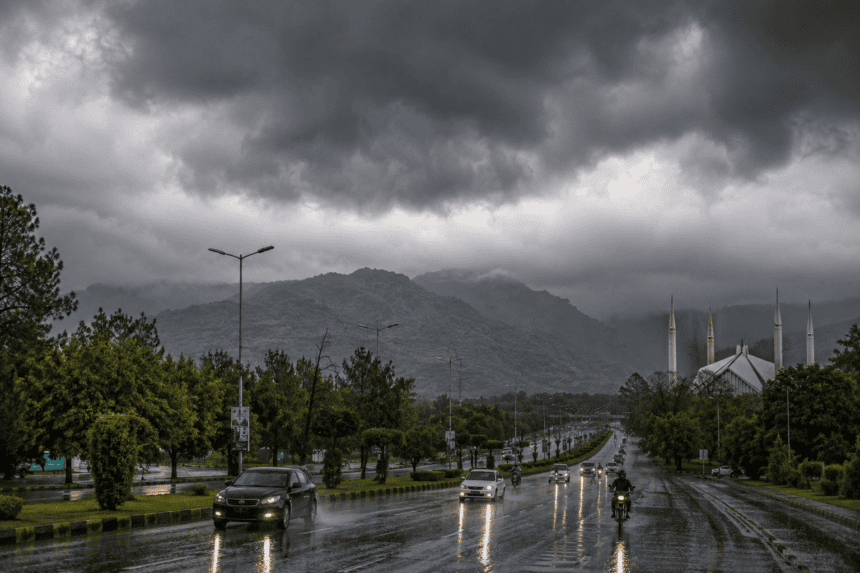
The Pakistan Meteorological Department (PMD) has issued a nationwide alert for heavy monsoon rains and thunderstorms, beginning Wednesday, July 24, and lasting through July 28. Forecasting widespread precipitation, the weather office warns that the incoming system will likely trigger urban flooding in major cities and flash floods in vulnerable mountainous regions.
The current weather cycle is driven by strong monsoon currents arriving from the Arabian Sea, which are expected to collide with western disturbances over the upper parts of the country.
“We are looking at significant rainfall across the country,” a PMD spokesperson said. “The intensity is high enough that residents in low-lying areas need to remain alert to potential water accumulation.”
Islamabad, Rawalpindi, Lahore, and Peshawar are bracing for heavy downpours, which often paralyze traffic and overwhelm aging drainage infrastructure. The PMD’s advisory specifically highlights the risk of urban flooding in these metropolitan hubs, urging municipal authorities to clear storm drains before the brunt of the storm hits.
In the north, the focus shifts to the risk of landslides. The PMD warned that the heavy rainfall could destabilize slopes in Murree, Galliyat, Mansehra, and the Kashmir region, potentially blocking key transport routes. Travelers are being advised to check road conditions before heading into mountainous terrain over the next five days.
Farmers in lower Punjab and Sindh have a different set of concerns. While the moisture is generally beneficial for crops, the intensity of the forecast could lead to waterlogging in fields that have not yet recovered from previous erratic weather patterns.
The National Disaster Management Authority (NDMA) has coordinated with provincial departments to preposition machinery and emergency response teams in high-risk zones. While the monsoon provides a vital reprieve from the summer heat, the PMD’s data suggests this particular window will be marked by volatile weather rather than steady, soaking rain.
Residents should expect intermittent power outages and travel delays as the system moves across the country, with the peak intensity expected between Thursday and Saturday.