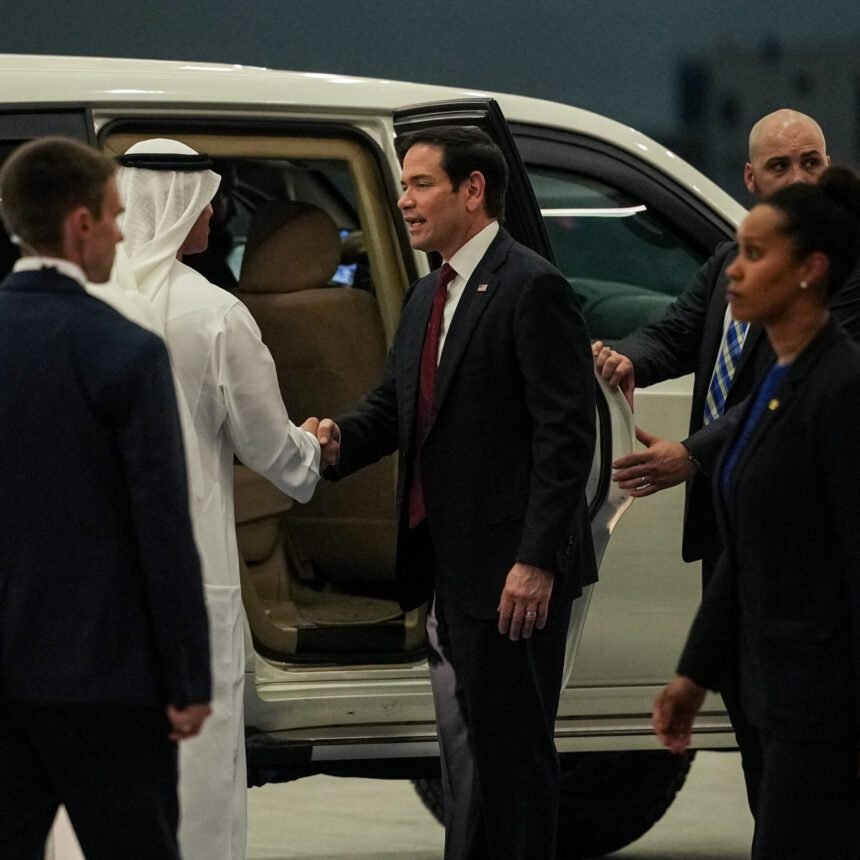
Washington, D.C. — U.S. Secretary of State Marco Rubio has sought to reassure Gulf Arab allies regarding ongoing diplomatic efforts involving Iran, emphasizing that any potential agreement would prioritize regional security and address the concerns of America’s partners in the Middle East.
Speaking during meetings with Gulf officials, Rubio stressed that the United States remains committed to maintaining strong relationships with its regional allies while pursuing diplomatic solutions aimed at reducing tensions and preventing further conflict. He noted that consultation with partner nations would remain an important part of the negotiation process.
The discussions come amid heightened regional interest in developments related to Iran’s nuclear program and broader security issues. Several Gulf countries have closely monitored diplomatic efforts, expressing concerns about how any future agreement could affect the balance of power and stability in the region.
Rubio stated that Washington understands the security concerns of Gulf Arab nations and is committed to ensuring that any agreement contributes to long-term peace and regional stability. He emphasized that diplomacy and verification measures remain essential tools for addressing complex security challenges.
According to U.S. officials, ongoing diplomatic efforts are intended to reduce the risk of military confrontation while encouraging compliance with international commitments. American representatives have also reiterated the importance of transparency and international monitoring mechanisms in any future arrangement involving Iran.
Meanwhile, Gulf leaders have continued to advocate for a consultative approach, arguing that countries most directly affected by regional developments should have their perspectives considered during negotiations. Analysts note that Gulf states have increasingly sought a greater role in discussions concerning regional security and diplomatic initiatives.
Political observers say Rubio’s outreach reflects Washington’s recognition that regional support is critical for the success of any diplomatic framework involving Iran. They note that maintaining confidence among key allies remains a priority as negotiations continue.
Iranian officials, for their part, have maintained that their policies are focused on national interests and regional cooperation, while continuing to call for the easing of economic sanctions. Tehran has also emphasised its position that its nuclear activities are intended for peaceful purposes.
Experts suggest that while diplomatic engagement may help reduce immediate tensions, significant challenges remain. Differences over security concerns, sanctions, verification procedures, and regional influence continue to complicate efforts to reach a lasting agreement.
As discussions move forward, Gulf Arab countries are expected to closely monitor developments and seek assurances that their security interests will be protected. The outcome of these diplomatic efforts could have significant implications for regional stability, international relations, and future cooperation in the Middle East.
For now, Rubio’s message appears focused on reinforcing trust among U.S. allies while supporting diplomatic initiatives aimed at preventing escalation and promoting long-term peace in the region.