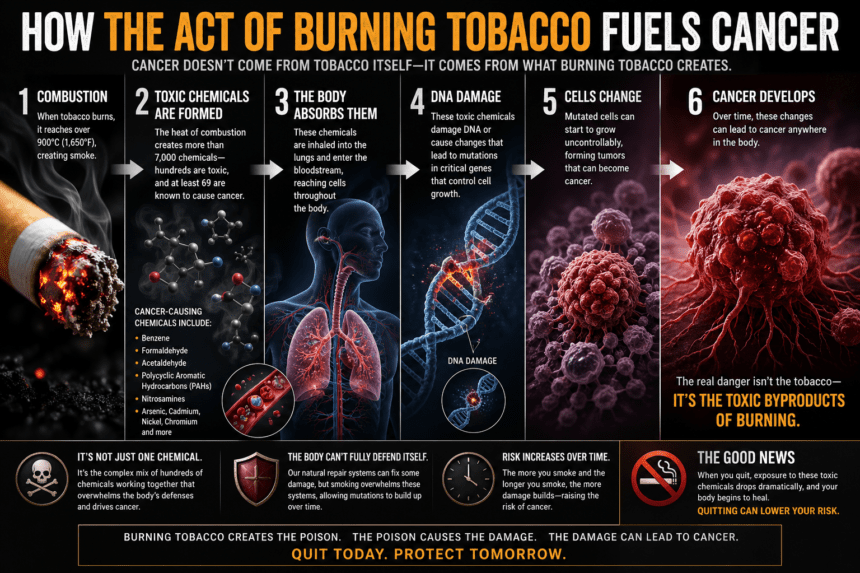
The act of lighting a cigarette does more than deliver nicotine; it triggers a high-temperature chemical reaction that transforms dried leaves into a potent cocktail of carcinogens. When tobacco burns, it reaches temperatures exceeding 800°C, creating a complex plume of over 7,000 chemicals. At least 70 of these compounds are known to cause cancer. The primary culprits are polycyclic aromatic hydrocarbons (PAHs) and tobacco-specific nitrosamines (TSNAs).
As the cigarette burns, these substances bind directly to DNA, causing mutations in cells. When these mutations occur in genes responsible for controlling cell growth—specifically the p53 tumor suppressor gene—the result is often uncontrolled cell division. This is the biological foundation of a tumor.
“The damage isn’t just cumulative; it’s transformative,” says Dr. Elena Rossi, an oncologist specializing in thoracic malignancies. “Once the DNA structural integrity is compromised by these combustion byproducts, the body’s natural repair mechanisms start to fail. That’s when you move from simple cellular irritation to malignant progression.” The lung is the primary site of attack, but the damage doesn’t stay there. As smoke is inhaled, carcinogens enter the bloodstream, traveling to the bladder, pancreas, and kidneys. This systemic exposure explains why smokers face heightened risks for cancers far removed from the respiratory tract.
The heat itself is a secondary, often overlooked, factor. Chronic thermal irritation of the throat and esophagus creates a cycle of inflammation and tissue repair. This constant stress on cells increases the likelihood of replication errors, providing more opportunities for cancerous mutations to take hold. Public health data remains stark. Despite decades of awareness campaigns, smoking remains the leading cause of preventable cancer deaths globally.
The industry has long focused on the addictive nature of nicotine, but the medical reality is that the combustion—the literal fire—is what turns a habit into a lethal health crisis. For the user, the math is simple: the longer the exposure to these combustion byproducts, the higher the biological cost. Every cigarette is a fresh injection of DNA-damaging agents, and the body’s ability to purge these toxins diminishes with every passing year of use.