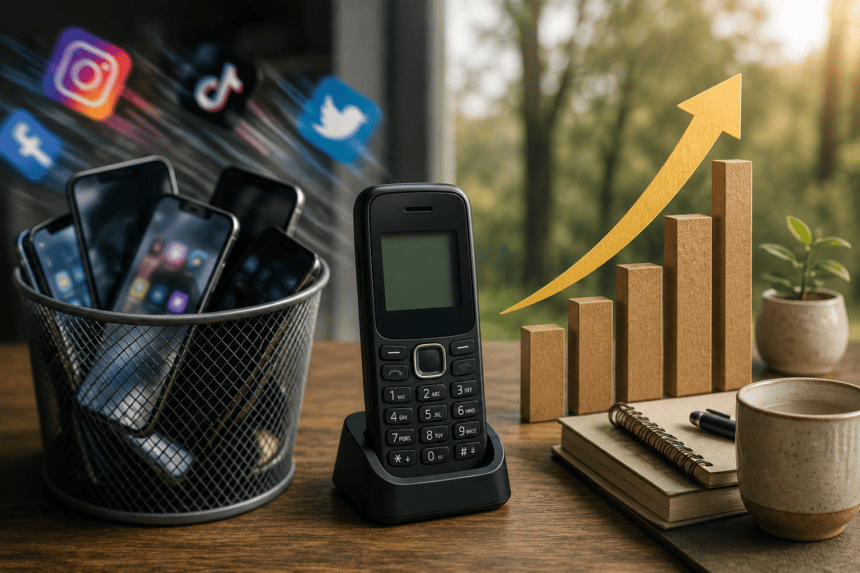
The smartphone is losing its grip. After nearly two decades of total dominance, a growing segment of consumers is ditching high-end devices for “dumb phones”—simple handsets capable of little more than calls and texts.
Retailers report a steady uptick in sales for feature phones, particularly among Gen Z and burnt-out professionals. The trend isn’t driven by a lack of affordability, but by a deliberate rejection of the constant connectivity that defines modern life.
Data from recent market analyses shows that while the global smartphone market has plateaued, the demand for basic mobile hardware has seen a resurgence. It’s a quiet rebellion against the “attention economy.” Users are finding that the cost of an iPhone or a Pixel—in both dollars and mental bandwidth—has finally become too high.
“I spent six hours a day staring at a black mirror,” says Sarah Jenkins, a graphic designer who switched to a Nokia 2660 Flip last month. “My screen time notifications were a constant source of guilt. Now, I’m unreachable, and I’ve never been more productive.”
For many, the appeal lies in the lack of features. Without an endless scroll of social media feeds, push notifications from news apps, or the constant ping of work emails, the phone reverts to its original purpose: a utility. You use it when you need it, and you put it down when you don’t.
Tech companies have taken notice. HMD Global, the manufacturer behind the revived Nokia brand, has leaned into this “digital detox” movement. They aren’t selling specs or camera sensors; they’re selling focus. The marketing shift marks a departure from the industry’s long-standing obsession with bigger, faster, and more connected hardware.
Critics argue that the move is impractical in a world designed for mobile apps, from banking to ride-sharing. A basic phone can’t handle a QR code menu or a two-factor authentication prompt, often forcing users to carry a tablet or laptop as a backup.
Despite the logistical hurdles, the trend suggests a shift in the cultural conversation around technology. After years of chasing the latest upgrade, a small but vocal group of users is deciding that the smartest move is to disconnect.