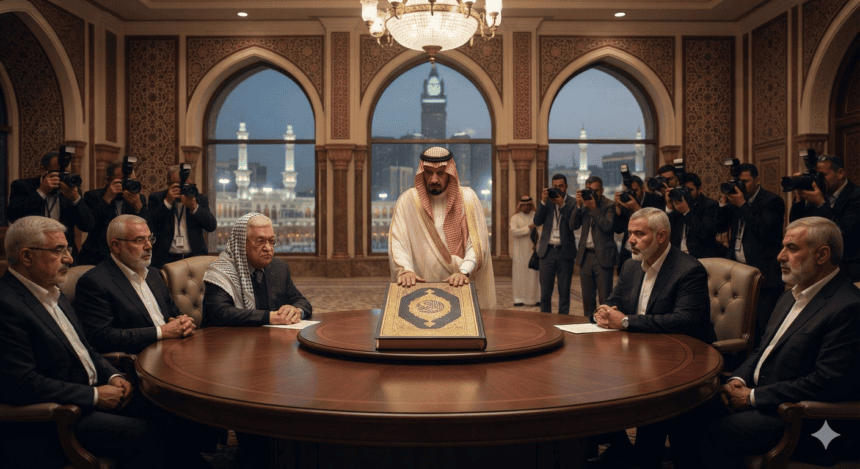
The Mecca Agreement, intended to bridge the chasm between Fatah and Hamas, remains stuck in a cycle of procedural deadlock. While the deal promises a unified Palestinian government, the reality on the ground in Gaza and the West Bank suggests the accord is more of a paper promise than a political breakthrough.
The primary hurdle is the fundamental disagreement over security control. Fatah, backed by international recognition, insists on a single security apparatus under the authority of the Palestinian Authority. Hamas refuses to relinquish its armed wing, the Izz ad-Din al-Qassam Brigades, viewing the force as its ultimate leverage and a non-negotiable pillar of its identity.
Financial oversight provides another layer of friction. Donors are hesitant to fund any reconstruction efforts in Gaza if Hamas retains a role in the administration of funds. The international community, led by the U.S. and the EU, continues to demand that any government formed under the agreement recognize Israel and renounce violence. Hamas remains steadfast in its refusal to meet these conditions, effectively grounding the diplomatic machinery before it can even start.
“We are talking about two different visions for the Palestinian future,” said a senior regional analyst based in Cairo. “One side wants a diplomatic path to statehood, while the other is built on the premise of armed resistance. You cannot simply sign a document to erase that ideological divide.”
Internal pressure is also mounting. The Palestinian public, exhausted by years of factional infighting and economic isolation, is increasingly cynical. Protests in both Gaza and Ramallah have targeted both leaderships, signaling that the people care less about the signatures on a document and more about the lack of jobs, power, and basic security.
Regional actors, particularly Saudi Arabia, have invested significant political capital into the deal as a way to project stability. Yet, the agreement lacks a robust enforcement mechanism. Without a neutral third party to mediate disputes or oversee the implementation of security reforms, the deal is left to the mercy of the very factions it aims to reconcile.
The agreement currently sits in a state of suspended animation. Until both sides decide that political survival through unity outweighs the benefits of their separate, entrenched power bases, the Mecca Agreement will likely remain a series of headlines without a footprint in reality.