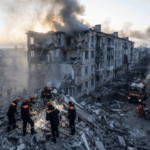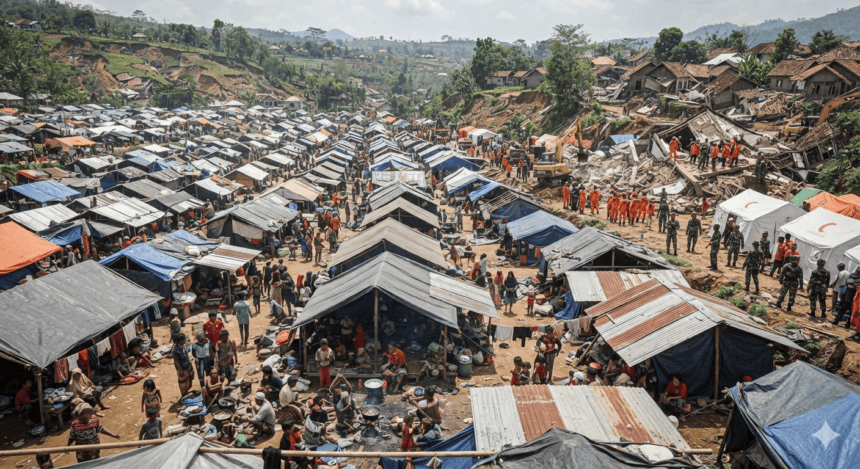
WEST JAVA — A powerful earthquake struck Indonesia’s West Java province Tuesday, flattening homes and forcing thousands into makeshift shelters as rescue teams scramble to reach survivors trapped beneath the debris.
The 5.6-magnitude quake hit near the town of Cianjur at a shallow depth of 10 kilometers. While the tremors were relatively localized, the shallow epicenter proved catastrophic for the densely populated region. Mud-brick homes collapsed instantly, burying families in their sleep and during the midday school rush.
Local officials confirm at least 162 people are dead, though that number is expected to climb. Hospitals in the area are already overwhelmed, with doctors treating victims on the pavement outside as emergency rooms reached capacity within hours of the first shock.
“The situation is chaotic,” said one regional disaster mitigation officer. “We are seeing people arriving with crush injuries, broken bones, and deep lacerations. We don’t have enough beds, and the aftershocks are keeping everyone on edge.”
More than 13,000 people have been displaced, according to government figures. Many are now sheltering in tents or open fields, fearing that their homes—some already structurally compromised—will collapse during the series of secondary tremors that have rattled the region since the initial strike.
Infrastructure damage is significant. Falling trees and landslides have severed roads leading to remote villages, effectively cutting off aid convoys. Excavators and heavy machinery are struggling to navigate the narrow, mountainous terrain, forcing rescue workers to dig through concrete and timber with little more than hand tools.
Cianjur is known for its steep hills and older housing stock, a combination that made this specific earthquake far more lethal than a stronger tremor in a modern city might have been. The lack of earthquake-resistant design in rural residential areas left residents with virtually no protection when the ground began to heave.
The government has deployed military units to assist with the search and rescue operations, but the window for finding survivors is closing. With heavy rains forecasted for the area overnight, the threat of further landslides looms over both the survivors and the responders.
For the thousands huddled in tents tonight, the crisis is far from over. With homes leveled and local infrastructure in ruins, the focus has shifted from immediate survival to the grim reality of a long, difficult recovery.