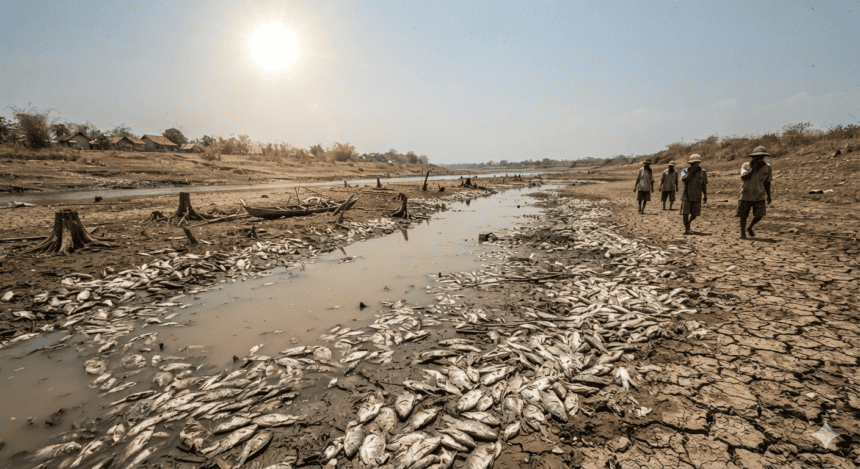
The stench of decay hangs over the banks of the Indragiri River. Millions of fish, gasping for oxygen as water levels plummet, have died in the mud, leaving local communities facing a dual crisis of environmental collapse and food insecurity.
What was once a vital artery for Riau province is now a series of stagnant, shallow pools. The drought, exacerbated by an intense El Niño cycle, has pushed water levels to historic lows. Farmers and fishermen, who rely on the river for their livelihood, are watching their primary resource evaporate in the heat.
“I’ve lived here thirty years, and I’ve never seen the water this low,” said Ahmad, a local fisherman who spent his morning clearing rotting carcasses from his nets. “The river is our life. When the river dies, we don’t have much left.”
State meteorological agencies report that rainfall in the region has dropped by nearly 60% since the start of the season. The lack of flow prevents oxygenation, turning the remaining water into a trap for aquatic life. Biologists warn that the mass die-off isn’t just an immediate loss of fish stocks; it’s a sign that the local ecosystem is struggling to recover from prolonged heat stress.
The government has begun shipping water tankers to the most affected villages, but for many, it’s a stopgap measure. Families who once harvested fresh fish daily are now relying on government rations, and the stagnant water sources are raising fears of a spike in waterborne diseases.
As the sun beats down on the cracked riverbed, the economic impact is becoming clear. With the river no longer navigable for small transport boats, the cost of moving goods in and out of remote villages has doubled.
Meteorologists see no immediate relief on the horizon. The dry season is expected to linger for several more weeks, meaning the riverbed will likely continue to shrink. For the people living along the Indragiri, the coming month is less about recovery and more about survival.