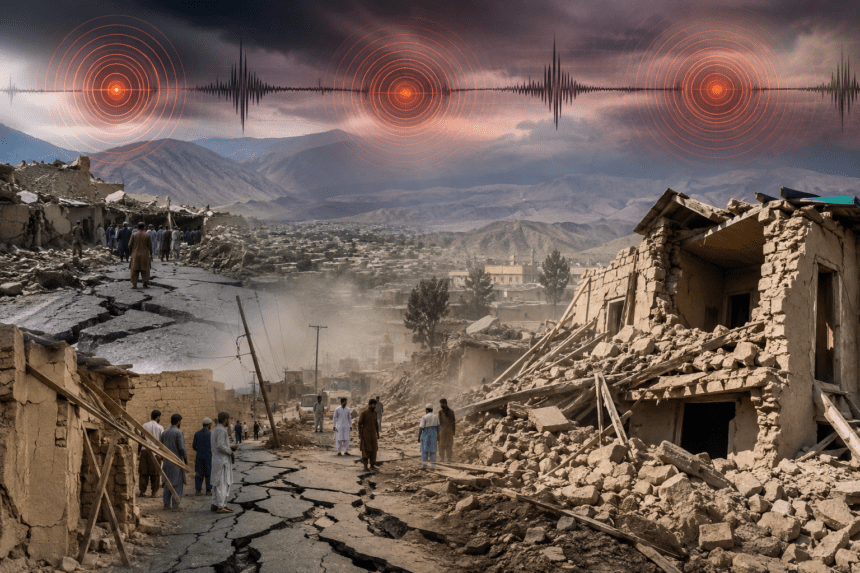
KOHLU — Residents of Balochistan’s Kohlu district spent a tense Tuesday as a series of three earthquakes rattled the region, heightening fears of structural instability in an area already prone to seismic activity.
The seismic activity began in the early hours, with the first tremor striking before dawn, followed by two subsequent jolts that sent families rushing into the streets. While the provincial disaster management authorities have yet to report any loss of life, the psychological toll on a population living in vulnerable housing is immediate.
Local officials confirmed the tremors were felt across several tehsils, though the epicenters were concentrated near the district’s mountainous periphery. The lack of heavy casualties appears to be a matter of geography; the quakes hit sparsely populated areas, sparing the more densely packed residential centers of Kohlu city.
“We felt the ground shake three separate times,” said Mohammad Khan, a local shopkeeper. “People are terrified to stay indoors, but the nights are too cold to remain outside.”
The Balochistan Provincial Disaster Management Authority (PDMA) has mobilized teams to assess damage to mud-brick homes, which remain the primary form of housing in many parts of the district. These structures are notoriously fragile during seismic events. Rescue teams remain on high alert, though the rugged terrain has complicated initial damage assessments in remote pockets.
Geological experts point to the Chaman Fault line—a massive tectonic boundary—as the primary driver of the region’s instability. Balochistan sits atop a complex intersection of tectonic plates, making it one of the most seismically active zones in Pakistan.
With the tremors continuing, the district administration has advised residents to avoid damaged structures and stay clear of unstable slopes. For now, the people of Kohlu are left waiting—not just for the aftershocks to cease, but for the government to move beyond disaster response and address the long-term need for earthquake-resistant infrastructure in the province.