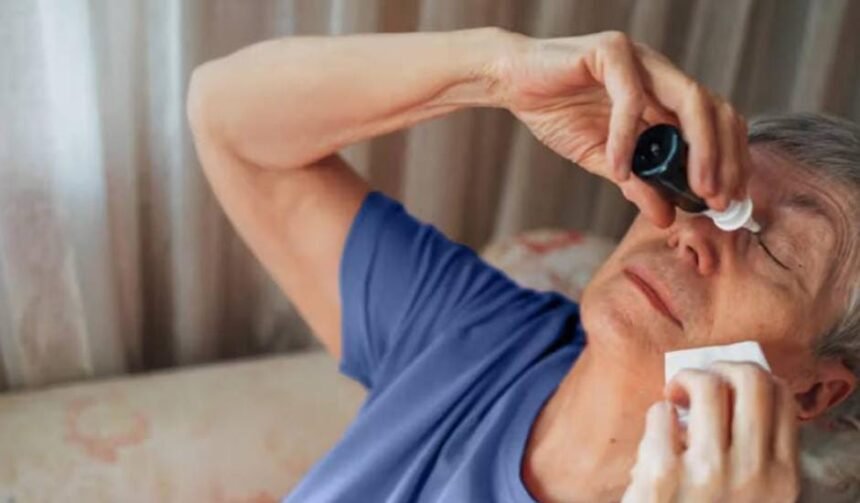
Tired of reading glasses? New eye drop might be the answer!
Millions of people over 40 know the daily struggle — reaching for reading glasses just to check a message, read a menu, or look at a map. But a new breakthrough eye drop could change that.
Researchers at the Center For Advanced Research For Presbyopia in Argentina have unveiled promising results for a new pilocarpine-diclofenac eye drop designed to restore near vision naturally — potentially freeing millions from their dependency on reading glasses.
A new approach to presbyopia
Presbyopia, the age-related condition that makes it hard to see close up, affects an estimated 1.8 billion people worldwide. Traditionally, treatments include reading glasses, bifocals, multifocal contact lenses, or surgeries like LASIK.
You may like to read: Bionic eye progress revealed: How close are we to restore vision?
The new eye drops offer a pharmacological approach. According to lead author Dr. Giovanna Benozzi, the drops help the eye “recover its natural ability to change focus from far to near,” a function gradually lost with age.
How the drops work
The study, presented at the 43rd Congress of the European Society of Cataract and Refractive Surgeons (ESCRS), tested three concentrations of pilocarpine (1%, 2%, 3%) combined with diclofenac on 766 participants.
This unique combination works by:
- Activating the ciliary muscle to restore focusing ability
- Creating a “pinhole effect” in the iris that improves near clarity
- Reducing side effects like headaches and eye strain often caused by pilocarpine alone
Meaningful vision gains
Results showed that most participants could read two to three extra lines on the Jaeger eye chart — a clinically significant improvement.