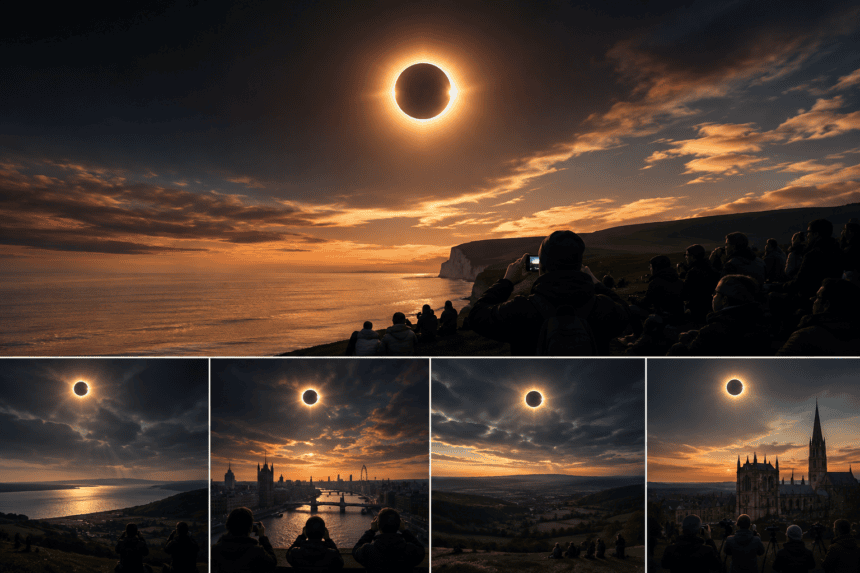
A partial solar eclipse will sweep across the United Kingdom this week, offering stargazers a rare glimpse of the moon obscuring a portion of the sun. While a total blackout remains unlikely, the event promises a distinct atmospheric shift for those in the right locations.
The phenomenon begins late in the afternoon, with the moon’s shadow touching the edge of the sun before moving across the horizon. For most of the UK, this will appear as a “bite” taken out of the solar disc. The duration varies by region, but the most significant coverage will be felt in northern and western areas.
Experts point to the Hebrides and parts of Northern Ireland as the prime viewing spots. In these locations, the moon will mask a larger percentage of the sun, creating a noticeable dimming effect—a twilight-like quality that often triggers birds to go quiet and temperatures to dip.
“It’s not a total eclipse, so don’t expect the streetlights to turn on,” said an astronomer familiar with the trajectory. “But it’s a rare moment to see the mechanics of our solar system play out in real-time.”
Safety remains the primary concern for observers. Looking directly at the sun—even during an eclipse—can cause permanent retinal damage. Standard sunglasses offer zero protection. Astronomers stress the use of ISO-certified eclipse glasses or indirect projection methods, such as a pinhole camera, to view the event safely.
The path of the eclipse follows a trend of increasing celestial activity over the British Isles. While cloud cover is the perennial enemy of UK stargazing, weather models currently suggest broken cloud patterns, which may provide clear windows for those positioned along the western coast.
If you miss this window, the next significant solar event visible from Britain isn’t slated until 2026. For those planning to watch, the best advice is simple: find a clear view of the western horizon and keep your protective eyewear on until the shadow has fully passed.