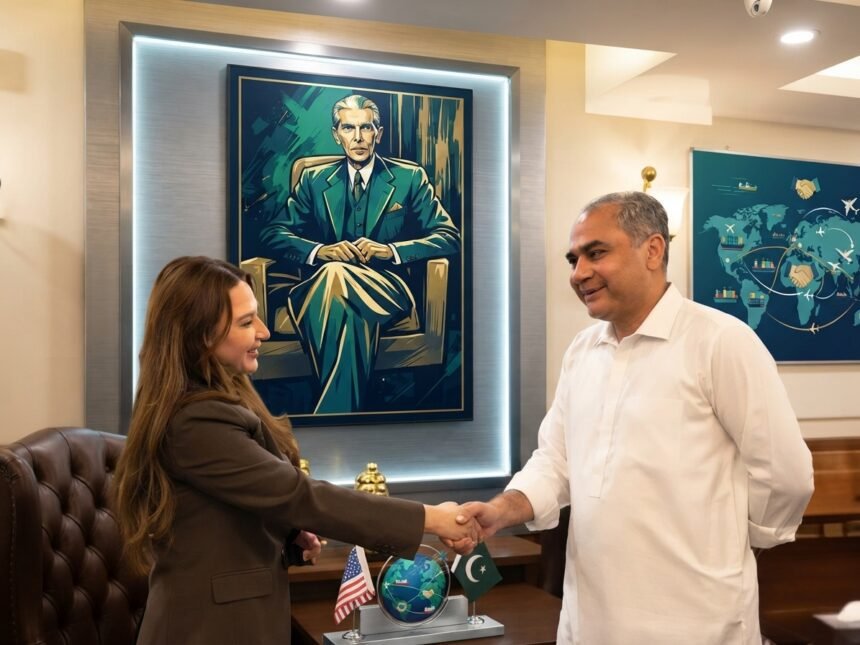
ISLAMABAD: US Chargé d’Affaires Natalie Baker on Tuesday praised Chief of Defence Forces and Chief of Army Staff Field Marshal Asim Munir for his role in promoting regional peace and stability during a meeting with Interior Minister Mohsin Naqvi.
According to the Ministry of Interior, Baker met Naqvi in Islamabad, where they discussed the regional situation, peace and stability and ways to strengthen Pakistan-US cooperation.
The ministry said the US diplomat appreciated Field Marshal Munir’s “positive diplomatic role” in efforts to promote peace and stability in the region.
The two sides also discussed expanding cooperation in law enforcement, including training programmes and professional development opportunities for Pakistani police officers.
They further exchanged views on strengthening joint efforts against organised crime, drug trafficking and human smuggling.
Meanwhile, Interior Minister Mohsin Naqvi said “significant progress” had been made during his recent talks with Iranian President Masoud Pezeshkian on efforts to end the conflict in the region.
Naqvi said the meeting with Pezeshkian had been “very positive and productive” and that discussions focused on the US-Iran conflict, tensions in the Middle East and possible steps towards a settlement.
He said the Iranian president had openly shared his government’s concerns and perspective, leading to what Naqvi described as a constructive exchange.
Naqvi and Field Marshal Munir visited Tehran on Monday as part of Pakistan’s diplomatic efforts to break the deadlock in the US-Iran conflict, reopen the Strait of Hormuz and encourage a negotiated settlement.
According to Inter-Services Public Relations, the Pakistani delegation held comprehensive discussions with Iran’s senior political and security leadership on preventing further escalation, reopening the strategic waterway and bringing the conflict to an expedited end.
Field Marshal Munir held separate meetings with Iranian President Masoud Pezeshkian, Mohsen Rezaei, Iranian Parliament Speaker Mohammad Bagher Ghalibaf, Foreign Minister Abbas Araghchi and Interior Minister Eskandar Momeni.
He also met Mohsen Rezaei, identified by the military’s media wing as the representative of Supreme Leader Ayatollah Mojtaba Khamenei on the Supreme National Security Council.
Iranian officials, according to ISPR, appreciated Pakistan’s constructive role and efforts to facilitate dialogue, reduce tensions and seek a peaceful settlement.
The US-Iran conflict, which began on February 28, remains unresolved despite diplomatic efforts by Pakistan and other regional countries.
A memorandum of understanding signed by Washington and Tehran on June 17 had outlined further negotiations towards a permanent settlement, but renewed hostilities subsequently stalled the process.
The Strait of Hormuz remains one of the main obstacles to a broader diplomatic breakthrough. Restrictions on shipping by Iran and a US naval blockade have complicated efforts to restore negotiations.
Pakistan, Qatar and Oman have continued diplomatic contacts aimed at easing the deadlock, with Islamabad maintaining that resolving the Hormuz issue could help create conditions for the wider US-Iran dialogue to resume.