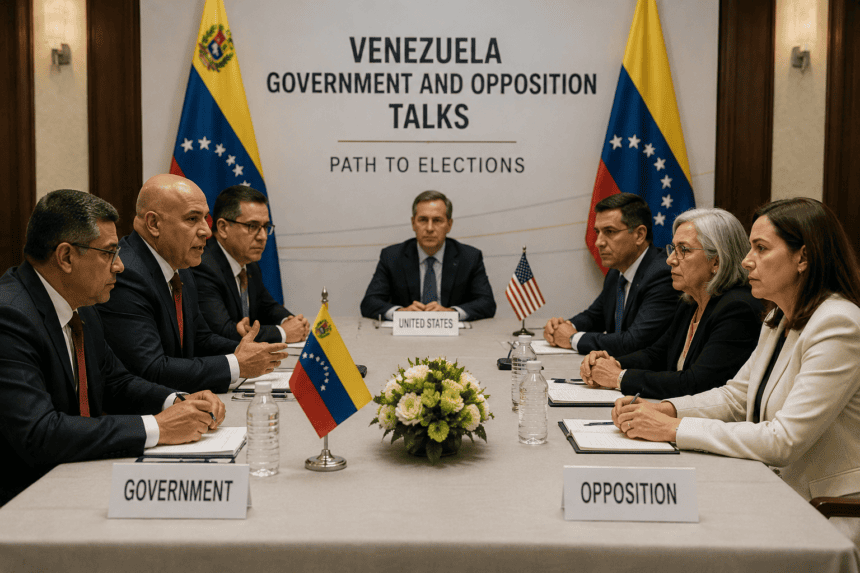
The Venezuelan government and an opposition faction are preparing to begin U.S.-backed negotiations aimed at creating a roadmap for free and democratic elections, in the latest effort to resolve the country’s prolonged political crisis. The talks are expected to begin in early August after a brief delay.
The negotiations will be led by Jorge Rodríguez, representing the government, and Dinorah Figuera, head of Venezuela’s 2015 opposition-controlled National Assembly, which continues to be recognized by the United States. The discussions are expected to focus on restoring democratic institutions, establishing conditions for credible elections, and addressing the future of international sanctions on Venezuela.
One of the most notable aspects of the talks is the absence of opposition leader María Corina Machado, widely regarded as the country’s most popular opposition figure. Machado said she was neither informed about nor invited to participate in the negotiations. While she criticized her exclusion, she stated that she would judge the process based on its results, including whether it leads to genuine democratic reforms and free elections.
The Venezuelan government is expected to seek the lifting of remaining U.S. and international sanctions, arguing that economic restrictions have harmed the country’s recovery. The opposition, meanwhile, wants guarantees for political freedoms, the release of political prisoners, independent electoral institutions, and fair electoral conditions before any vote is held.
The United States says it is facilitating the negotiations but insists it is not dictating the outcome. U.S. officials have expressed hope that the dialogue can help Venezuela move toward a peaceful democratic transition while respecting the will of its people.
The upcoming talks are viewed as a significant test for both sides. Previous rounds of negotiations between the Venezuelan government and the opposition have ended without lasting agreements, raising doubts about whether this latest effort can produce meaningful political reforms. Even so, many observers believe the dialogue offers one of the few remaining opportunities to establish a credible path toward future elections and greater political stability in Venezuela.