Blood donation is a simple procedure that can help patients who need blood because of accidents, surgeries, severe anemia, childbirth complications, or certain medical conditions. But what actually happens inside your body after you donate blood?
Your body immediately begins responding to the small reduction in blood volume and blood cells. Fortunately, the human body has efficient mechanisms for replacing what was donated.

What Happens During Donation?
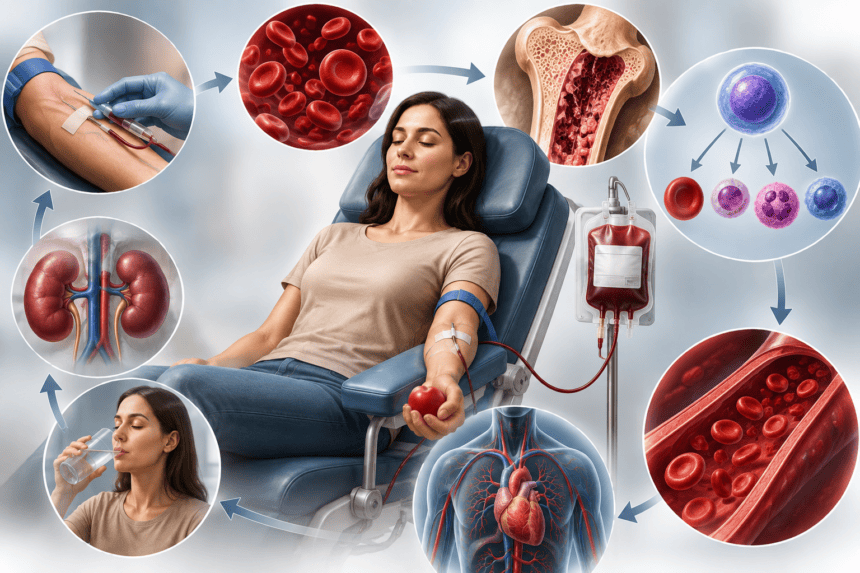
During a standard whole-blood donation, a certain amount of blood is collected through a sterile needle placed into a vein, usually in the arm.
The donated blood contains several important components:
- Red blood cells
- White blood cells
- Platelets
- Plasma
Your body does not replace all of these components at the same speed.
The first major change is a reduction in circulating blood volume. The body quickly begins adjusting to this change.
Your Body Replaces the Fluid First
One of the quickest things your body replaces is the fluid portion of blood, known as plasma.
After donation, fluid from tissues moves into the bloodstream. Your body also regulates water and salt balance through the kidneys and hormones.
This helps restore the volume of circulating blood.
That is one reason donors are commonly encouraged to drink fluids after donating. Good hydration supports the body’s natural recovery process.
What Happens to Red Blood Cells?
Red blood cells are responsible for carrying oxygen from the lungs to tissues throughout the body.
When you donate blood, you lose some red blood cells. The kidneys detect changes related to oxygen delivery and help regulate production of a hormone called erythropoietin.
Erythropoietin signals the bone marrow to produce more red blood cells.
The bone marrow gradually increases production, allowing the body to rebuild its supply.
This process takes longer than replacing plasma.
What Happens to Platelets and White Blood Cells?
Platelets help the blood form clots when you are injured. The body also continuously produces new platelets in the bone marrow.
White blood cells are part of the immune system and are also continuously produced.
Because the body normally maintains reserves and ongoing production of these blood components, a healthy person can generally recover from a standard blood donation.
Why Might You Feel Tired?
Some people feel completely normal after donating blood, while others experience temporary tiredness, light-headedness, sweating, or weakness.
These symptoms can happen because of temporary changes in blood volume, blood pressure, hydration, or the body’s response to the donation process.
For most healthy donors, these effects are short-lived.
Resting, drinking fluids, and eating a nutritious meal after donation can support recovery.
Does the Body Make New Blood?
Yes.
Your bone marrow is constantly producing blood cells. After blood donation, the production of red blood cells can increase to replace those that were lost.
The body carefully regulates this process rather than simply producing unlimited numbers of cells.
Over time, the balance of blood cells and plasma returns toward normal.
Why Is Blood Donation Important?
A single donation can provide blood components that may help multiple patients, depending on how the donated blood is processed.
Hospitals need reliable blood supplies because blood cannot simply be manufactured in a laboratory for routine transfusion.
This makes voluntary blood donation an important part of healthcare systems.
The Bottom Line
Blood donation temporarily removes a portion of your blood, but your body immediately begins working to restore it.
Plasma volume is restored relatively quickly, while replacing red blood cells takes longer. The bone marrow, kidneys, hormones, and circulatory system all participate in the recovery process.
For eligible healthy donors, blood donation is generally a safe procedure when performed by trained healthcare professionals.