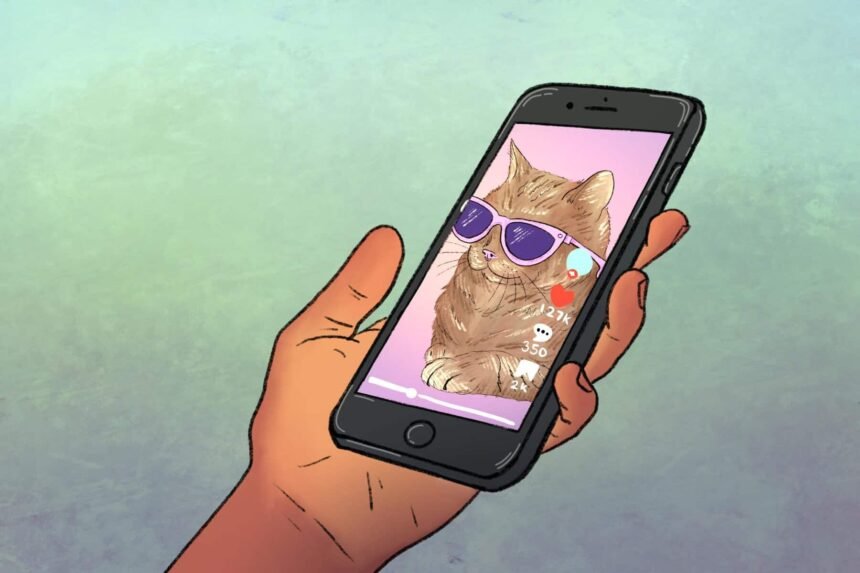
What may feel like harmless scrolling through Instagram Reels, TikTok videos, or YouTube Shorts is increasingly raising alarm among neuroscientists and neurologists. Emerging research suggests that short-form video content may exploit the brain’s reward circuitry in ways strikingly similar to addictive substances such as alcohol—and could potentially impair attention, memory, and motivation in the long run.
Instant Gratification: A Dopamine-Driven Loop
Short-form videos appear to trigger the brain’s reward system by releasing dopamine, the neurotransmitter intimately linked to pleasure, motivation, and reinforcement.
Professor Qiang Wang of Tianjin Normal University, in a peer-reviewed study published in NeuroImage, found that heavy users of short videos exhibit heightened activity in the brain’s reward circuitry—pathways closely associated with addiction to substances like alcohol or gambling.
“Short-form video addiction is a global public health threat,” warns Prof. Wang.
This “instant reward” consumption is linked to weakened attention, poor sleep, deteriorating mental health, and a heightened risk of depression.
The Neurological Fallout: Focus, Sleep, Memory
Dopamine’s hijack: Addictive behaviors—including content scrolling—can hijack the dopamine reward system. When dopamine spikes, neural connections form that reinforce pleasurable behaviors. Over time, this rewiring fosters compulsive cravings for that dopamine “rush,” akin to addiction.
Brain structures affected:
- Prefrontal Cortex: Responsible for attention, self-control, and decision-making. Chronic switching between bite-sized content may overtax this region. Prolonged exposure could lead to its shrinkage, diminishing executive function.
- Hippocampus: Central to memory formation and consolidation. Late-night scrolling can disrupt sleep and memory consolidation processes, leading to reduced learning ability and frequent lapses in focus.
Is Social Media Like Alcohol Addiction?
Direct neurotoxic damage from substances like alcohol differs from short-form video use. Yet, the parallel lies in how both usurp the brain’s reward system
What Counts as “Too Much”? The Emerging Risk of “Digital Dementia”
No consensus exists on a hard daily limit, but moderation is key. Experts advise that total screen time should ideally stay within 2–3 hours per day. Beyond this, experts also warn, the brain enters what he terms “digital intoxication”—a precursor to “digital dementia,” a state marked by chronic overstimulation, poor sleep, and sustained cognitive impairment.
Pakistan and Instagram: Exposure to Short-Form Video Content
Short-form video’s escalating influence is particularly relevant in Pakistan, where data underscores growing social media engagement:
- As of January 2024, Pakistan had 17.3 million Instagram users, with a gender breakdown of 64% male and 36% female.
- More recent figures (July 2025) show 18.59 million Instagram users, representing 8% of Pakistan’s population, still skewed heavily male (65%) compared to female (35%).
- Moreover, average social media data consumption per user in Pakistan hit 8.53 GB per month by June 2025—driven largely by short video platforms like Instagram, TikTok, YouTube, and Facebook.
Recommendations
- Set daily limits for short-form video consumption—ideally under 2–3 hours.
- Pause and reflect: Take frequent breaks, especially during long scrolling sessions.
- Prioritize sleep: Avoid screens before bedtime to protect memory consolidation.
- Update public awareness: Education campaigns and digital literacy efforts can help communities recognize and combat the risks of “digital intoxication.”