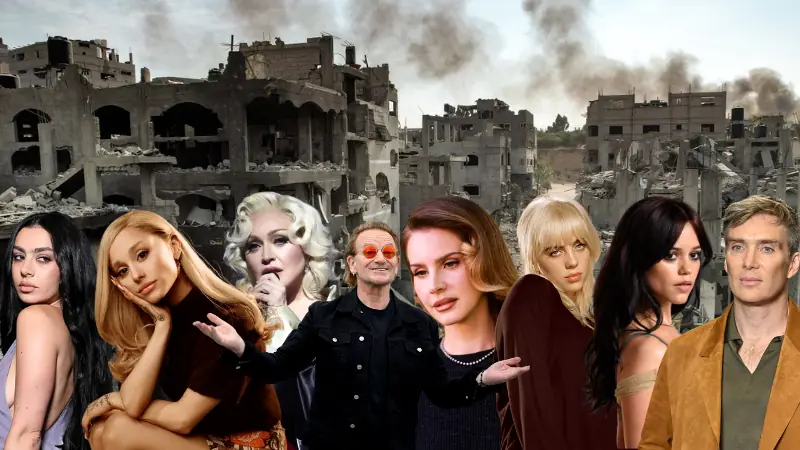
For nearly a year, Gaza has been burning under the weight of relentless bombardment, famine, and displacement. Yet, for much of that time, many of the world’s most influential voices — celebrities, artists, and cultural icons — remained silent. Now, as the crisis deepens beyond comprehension, their voices are finally rising. But the question haunting many observers is simple: why now? And perhaps more painfully, is it too late to matter?
A Sudden Chorus After Months of Silence
In recent weeks, several high-profile figures — from Jennifer Lawrence to Madonna and Ariana Grande — have broken their long silence. At the San Sebastián Film Festival, Lawrence called the situation in Gaza “nothing short of genocide,” adding that silence is “no longer an option for anyone with a conscience.” Madonna, meanwhile, made headlines when she publicly urged Pope Leo to visit Gaza “before it’s too late.”
These comments sparked global conversation, especially after years of muted celebrity engagement on Palestine. For decades, Hollywood’s stance on Israel and Gaza has been cautious, with many fearing backlash or professional repercussions for speaking out. But 2025 has seen something different — a cultural reckoning of sorts.
Movements like No Music for Genocide, a growing campaign where musicians pledge to restrict access to their songs in Israel, are reshaping how art intersects with moral responsibility. The shift isn’t just symbolic; it reflects an industry beginning to wrestle with complicity and conscience.
Symbolism or Substance?
Still, critics are skeptical. They argue that celebrity statements, however loud, often fizzle into symbolism rather than structural action.
“Posting about Gaza on Instagram is easy,” said Palestinian-American journalist Lina Abu Saif. “What matters is sustained advocacy — funding aid, lobbying policymakers, and elevating Palestinian voices.”
Even those speaking out acknowledge the risk of performative activism. Lawrence admitted she doesn’t “pretend to have the answers,” but hopes that “visibility brings pressure.” That humility resonated with many, especially amid growing criticism that Western media and culture have long centered the observer, not the victim, in Gaza’s story.
Reality on the Ground
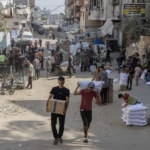
While celebrities discover their political voices, Gaza’s reality continues to deteriorate. According to UN reports, tens of thousands have died since October 2023. Hospitals are collapsing, famine looms, and safe zones barely exist. Aid convoys are still blocked or restricted.
Just this week, Greta Thunberg — who joined a humanitarian flotilla bound for Gaza — alleged torture after being detained by Israeli authorities. Israel denies the claims, but the incident reignited debate about Western double standards: if even a global climate activist isn’t safe when protesting for Gaza, what hope remains for ordinary civilians?
Timing Matters
That’s what makes the sudden celebrity awakening bittersweet. Their influence could’ve mattered most a year ago, when pressure might have swayed governments or media framing. Today, their solidarity feels more like reflection than resistance.
“It’s good they’re finally speaking,” said UK-based activist Riz Ahmed, who’s been consistently vocal since the conflict began. “But solidarity delayed is solidarity denied.”
A Chance for Redemption
Yet it’s not all cynicism. Campaigns like Save the Children’s “End the Horror”, featuring Guy Pearce and Annie Lennox, have drawn attention to Gaza’s children — many of whom know nothing but war. These initiatives may not rewrite foreign policy, but they do help keep the humanitarian conversation alive when attention spans fade.
Ultimately, celebrity influence is a double-edged sword: it amplifies, but it can also overshadow. The real power lies not in who’s speaking, but in who’s being heard.
In the End
It’s not too late for celebrities to make a difference — but it is too late to claim innocence through silence. The spotlight may have finally turned toward Gaza, but for countless lives already lost, that light came far too late.