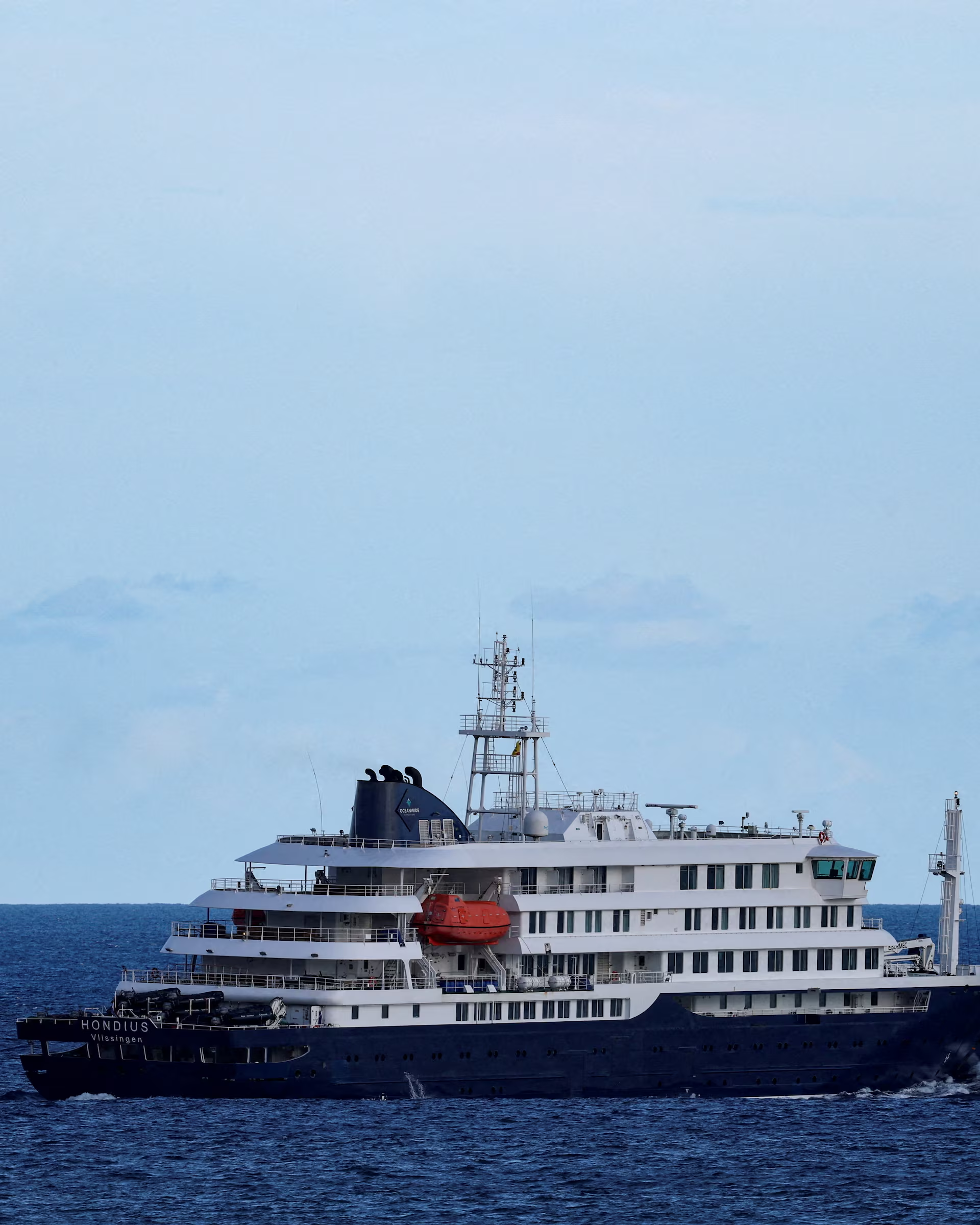
A hantavirus outbreak on a cruise ship sounds like a script for a disaster movie, but for passengers facing respiratory failure, the legal reality is even bleaker.
You can sue, but maritime law is designed to protect the industry, not the traveler. The path to a settlement starts with a single, difficult question: Did the cruise line know they had a rodent problem? Under federal maritime law, cruise lines aren’t “strictly liable” for your illness.
They only owe passengers “reasonable care under the circumstances.” In plain English, if a mouse carrying hantavirus snuck onto the ship in a port of call and bit a passenger an hour later, the cruise line likely isn’t responsible. To win, a passenger must prove the company was negligent meaning they knew about an infestation and did nothing to stop it.
“The burden of proof is entirely on the passenger,” says maritime legal experts. “You have to show the ship’s logs, previous complaints, or failed health inspections.
Without that ‘prior notice,’ the case dies in the water.” Then there is the “fine print” trap. Every cruise ticket is a binding legal contract that most passengers never read.
These contracts almost always include a “forum selection clause,” forcing you to sue the company in a specific court usually the U.S. District Court in Miami regardless of where you live or where the ship sailed. The clock is also ticking faster than usual. While most personal injury cases allow two to three years to file, cruise contracts typically slash that to just one year.
If you don’t provide written notice of your intent to sue within six months, some lines argue you’ve forfeited your rights entirely. The stakes are high. Hantavirus isn’t a stomach bug; it can lead to Hantavirus Pulmonary Syndrome, which carries a 38% mortality rate.
The medical bills alone for a weeks-long ICU stay can bankrupt a family. For those looking to file a class-action suit, the hurdles are even higher.
Most modern cruise tickets contain “class action waivers,” forcing passengers to fight their battles individually through arbitration rather than joining forces. Winning a hantavirus case requires more than just a positive blood test.
It requires a “smoking gun” a health inspector’s report or a whistleblower’s testimony proving the ship was a floating biohazard before the first passenger ever boarded. Without it, victims are often left with nothing but a mountain of medical debt and a very expensive, very tragic vacation memory.