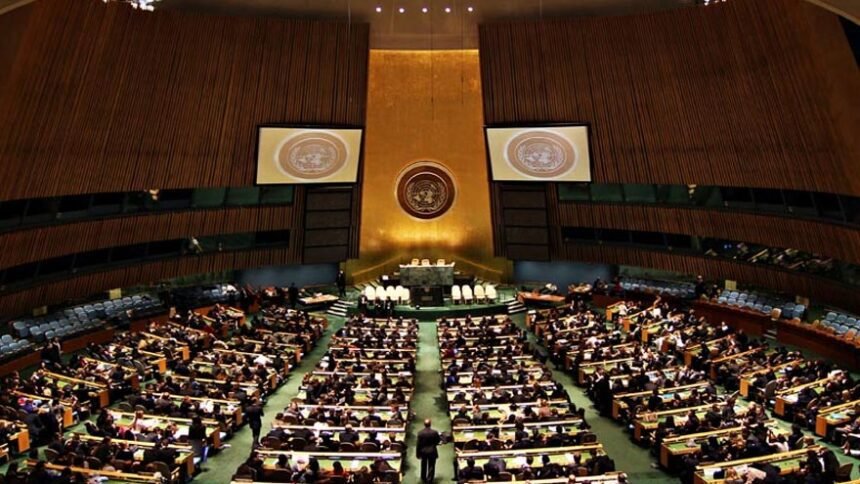
NEW YORK: A United Nations report has cleared Pakistan of any involvement in the Pahalgam attack and raised serious questions over India’s military action, known as Operation Sindoor, calling it a violation of international law.
The report by UN special experts strongly condemned the Pahalgam attack and stressed that those responsible must be identified and punished through lawful means. However, it found no credible or verifiable evidence linking Pakistan to the incident. The experts noted that Pakistan consistently denied the allegations and repeatedly called for an independent, transparent, and impartial investigation.
According to the findings, on May 7, 2025, India carried out military strikes inside Pakistani territory under Operation Sindoor. The UN experts stated that this use of force breached the UN Charter, as India failed to meet the legal conditions required to claim self-defense.
The report highlighted that India did not inform the UN Security Council under Article 51 of the UN Charter, which is a mandatory step when a state claims self-defense. This omission was described as a serious violation of international norms.
The experts also expressed deep concern over the humanitarian impact of the strikes. They reported that civilian areas were hit, mosques were damaged, and several civilians were killed or injured. Such actions, the report warned, could amount to violations of the right to life under international human rights law.
The UN experts emphasized that international law does not recognize any unilateral right to use military force in the name of counterterrorism. They cautioned that India’s actions could further escalate tensions and risk a wider regional conflict.
The report added that if India’s actions are treated as an armed attack, Pakistan would be legally entitled to exercise its right to self defense. It described India’s conduct as a serious breach of Pakistan’s sovereignty and the principle of non-intervention.
Beyond military concerns, the report also criticized India’s stance on the Indus Waters Treaty. It noted India’s refusal to engage in arbitration and its challenge to established dispute resolution mechanisms. UN experts urged India to implement the treaty in good faith and avoid actions that could harm Pakistan’s water rights or create humanitarian consequences.
The experts further revealed that India failed to respond to a formal UN questionnaire seeking clarification on key issues. These included evidence against Pakistan, compensation or apology for civilian casualties, compliance with the Indus Waters Treaty, and steps toward resolving the Jammu and Kashmir dispute and ensuring the right to self-determination for Kashmiris.
India has now been given 60 days to submit detailed responses. The replies will be made public on the UN website and presented to the UN Human Rights Council along with the full report.
The UN concluded by stressing that transparency, accountability, and respect for international law are vital to prevent further human rights violations and maintain regional stability.