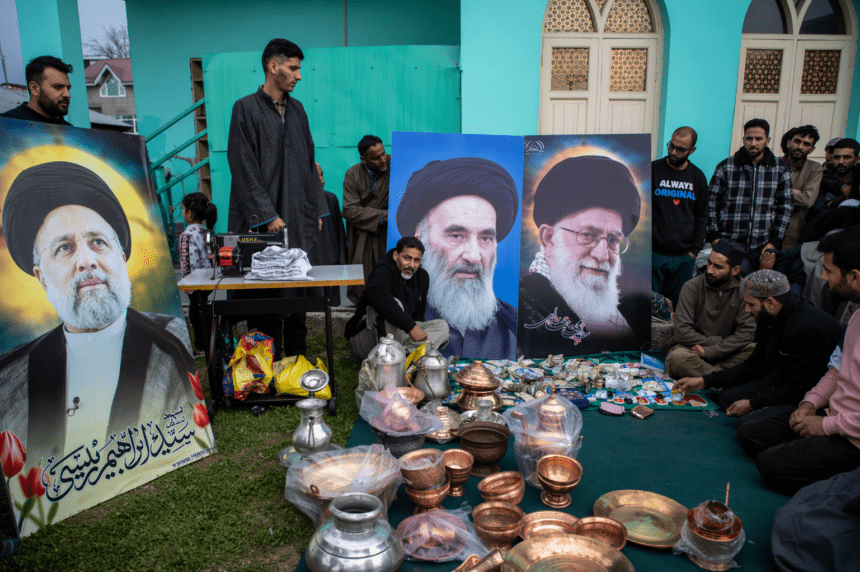
In towns and neighborhoods across Indian-administered Kashmir, donation tables for Iran have been filling with things people usually hold onto for years: gold earrings, wedding jewelry, copper utensils, livestock, motorcycles, even children’s piggy banks. What began as a relief effort has quickly turned into something bigger and more emotional — a public expression of grief, religious duty and political solidarity with people affected by the war in Iran.
The scale of the response has surprised even organizers. Al Jazeera reported that local estimates put the value of donations at up to 6 billion Indian rupees, or about $64 million, including cash, gold, jewellery, household goods, vehicles and livestock. AP and other reports described collection drives at imambaras, mosques, shrines and roadside stalls, with volunteers also going door to door in some places.
On the surface, it is a humanitarian story. But in Kashmir, it is also deeply personal. Many of those donating say they feel a religious and historical connection to Iran, especially in parts of the Valley with large Shia populations. Recent reporting says that link has been visible not only in aid drives but also in public mourning and protests since the war began on February 28, after U.S. and Israeli attacks on Iran.
That emotional pull shows up most clearly in the details. Reports from Budgam near Srinagar described donation tables stacked with cash, bangles, rings and heirlooms, while some people handed over far more unusual items, including a truck, a motorbike and copper samovars usually reserved for family occasions. One recurring image in the coverage is children arriving with smashed or emptied savings boxes, giving whatever they had saved.
Eid appears to have given the campaign another push. AP reported that donations rose around Eid al-Fitr, when some families chose to mark the holiday through charity for Iran rather than private celebration. For wealthier donors, part of the money has reportedly gone directly to a relief account run through the Iranian Embassy in New Delhi, which publicly thanked Kashmiris for their support.
There is, of course, a political layer beneath the charity. Kashmir has long had intellectual, religious and cultural ties with Iran, and that relationship carries special weight at a time when the region itself remains politically bruised and heavily securitized. In that sense, these donations are not just about sending aid abroad. They are also a way for Kashmiris to say something about who they are, what they value, and which suffering they recognize as their own. That interpretation is supported by multiple reports describing the campaign as driven by both humanitarian concern and a sense of shared identity.
So why are Kashmiris donating gold and breaking piggy banks for Iran? Because for many donors, this is not charity in the narrow sense. It is remembrance, faith, politics and empathy all tied together. In Kashmir, the contribution itself matters, but so does the message behind it: when people feel that another community’s pain is close to their own, even the most personal possessions can suddenly become public offerings.