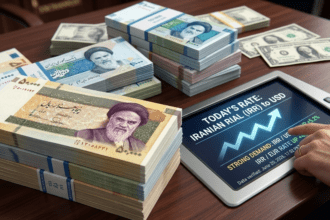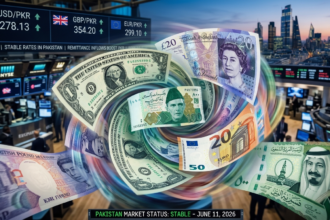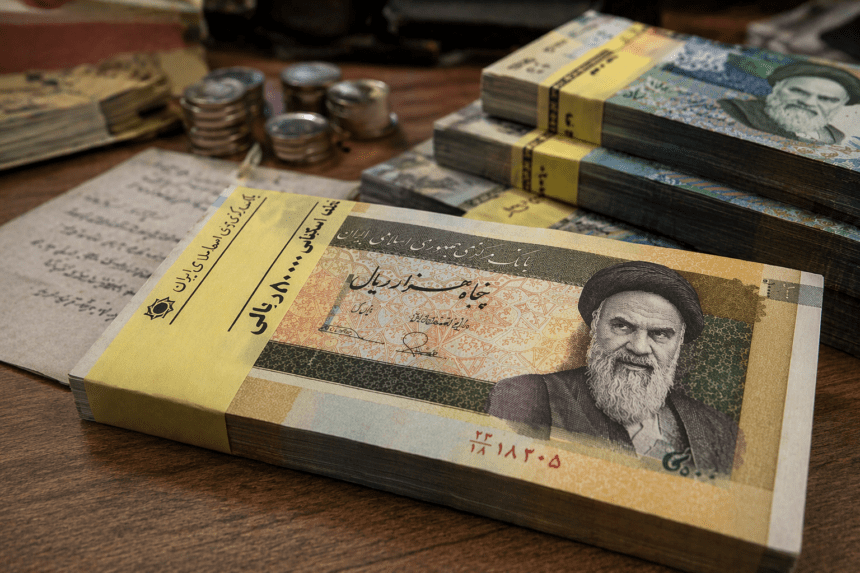
The Iranian rial was trading at roughly PKR 0.000211 per rial on Friday, April 17, 2026, according to live currency trackers, putting 1 Pakistani rupee at about 4,736 Iranian rials. Another widely used currency source showed a very similar range, at about PKR 0.0002116 per rial.
That leaves the rial deep in ultra-low-value territory against the Pakistani rupee, a level that reflects the broader weakness seen in Iran’s currency market in recent months. Exchange-rate history pages tracking the pair show the worst 2026 level around PKR 0.0002 per rial on April 14, with the annual average still much higher because earlier months were less severe.
There is, though, a catch that often confuses readers. In Iran, prices are frequently discussed in tomans, not rials, even though the rial remains the official currency unit. One toman equals 10 rials, so rate comparisons can look wildly different if one source is effectively using toman-based market language while another is quoting the official rial figure.
That matters because headlines about the Iranian currency can sometimes sound even more dramatic without that distinction. Recent reporting has pointed to intense pressure on Iran’s economy, with the free-market rial reportedly weakening to around 1.58 million per US dollar in mid-April, underscoring how unstable the broader currency environment has become.
For Pakistani readers, the practical takeaway is simple: the IRR/PKR rate remains extremely weak, and even small movements in the quoted number can represent large shifts when converted into bigger sums. At the live rate cited Friday, 10,000 Iranian rials were worth a little over PKR 2.11, while 100,000 rials came to roughly PKR 21.11.
In market terms, this is less a story about day-to-day retail exchange convenience and more a reflection of Iran’s prolonged currency stress. Unless there is a meaningful shift in economic conditions, sanctions pressure, or market confidence, the rial is likely to remain under scrutiny — and rate trackers may continue showing sharp-looking numbers that require careful reading, especially when rial and toman are being used interchangeably. This last point is an inference based on how the currency is quoted and recent reporting on market pressure.