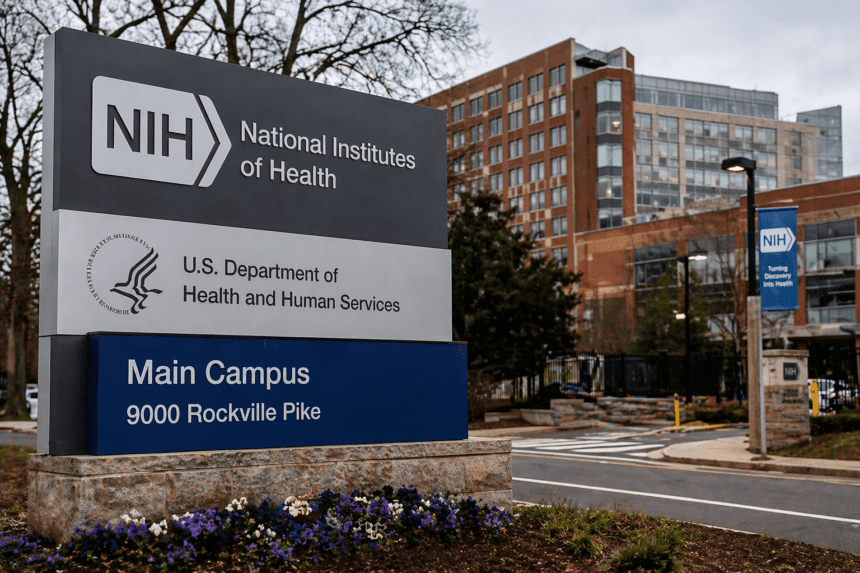
The National Institutes of Health is falling further behind in funding new medical research in President Donald Trump’s second year back in office, according to recent analyses showing a sharp slowdown in grant awards and spending compared with previous years.
Recent tracking indicates the NIH is roughly $1 billion behind its usual pace for new research spending, raising concern that thousands of scientific projects are being delayed even though Congress has already appropriated the money. One analysis found that by early March, the agency had issued 74% fewer new competitive awards than the average for the same point in fiscal years 2021 through 2024.
Separate reporting has also shown the slowdown affecting the broader research pipeline. The NIH had awarded far fewer grants than at the same stage a year earlier, and major academic and medical research groups have warned that prolonged delays could disrupt labs, stall hiring, and weaken training programs for young scientists.
The funding slowdown comes amid wider uncertainty over the administration’s approach to biomedical research. Trump administration budget proposals have sought deep cuts to NIH spending and major structural changes, including consolidating institutes and sharply reducing grant support, although those proposals would still need congressional approval.
Researchers and advocates say the immediate effect is not only fewer grants, but growing instability across the U.S. scientific system. Universities and labs depend on timely NIH awards to launch studies, retain staff, and support early-career investigators, so slower disbursement can have ripple effects even before formal budget cuts take effect.
The issue has intensified debate in Washington over whether the slowdown reflects temporary administrative changes or a broader reshaping of federal research priorities that could leave long-term damage to the country’s medical innovation system.