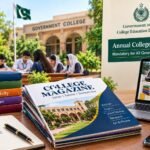
The Punjab government has announced 460 scholarships for students from Balochistan in a move aimed at widening access to higher education and strengthening inter-provincial cooperation. The program is being run through the Punjab Educational Endowment Fund (PEEF) in collaboration with the Balochistan Education Endowment Fund (BEEF), with applications now open for eligible students holding a Balochistan domicile.
According to reports on the scheme, the scholarships are meant for talented and deserving students and cover multiple levels of study, including intermediate, technical education, undergraduate, and MS/MPhil programs. Applicants are reported to need at least 60 percent marks or a minimum 2.5 CGPA to qualify under the announced criteria.
The announcement has also carried political weight. Balochistan Chief Minister Mir Sarfraz Bugti publicly welcomed the initiative and described it as an important step toward opening the doors of quality education to students in the province. Coverage of the announcement framed the scholarships not just as financial aid, but as a gesture of support meant to reduce regional disparities in educational opportunity.
One detail has varied across reports: a few outlets cited 470 scholarships, but the more consistent figure across current coverage is 460, including reports that specifically link the scheme to PEEF and BEEF for the 2025–26 academic year. Because of that mismatch, the safest reading is that Punjab has announced a Balochistan-focused scholarship package in the 460 range, pending any fuller official notification spelling out the final total. That is an inference based on the reporting pattern, not a formal government clarification.
For students in Balochistan, the significance is pretty clear. In a province where access to quality institutions and sustained financial support has often been uneven, even a few hundred scholarships can make a real difference. For Punjab, meanwhile, the announcement gives the government a chance to present itself as investing beyond its own provincial boundaries and tying education policy to a broader message of national inclusion.