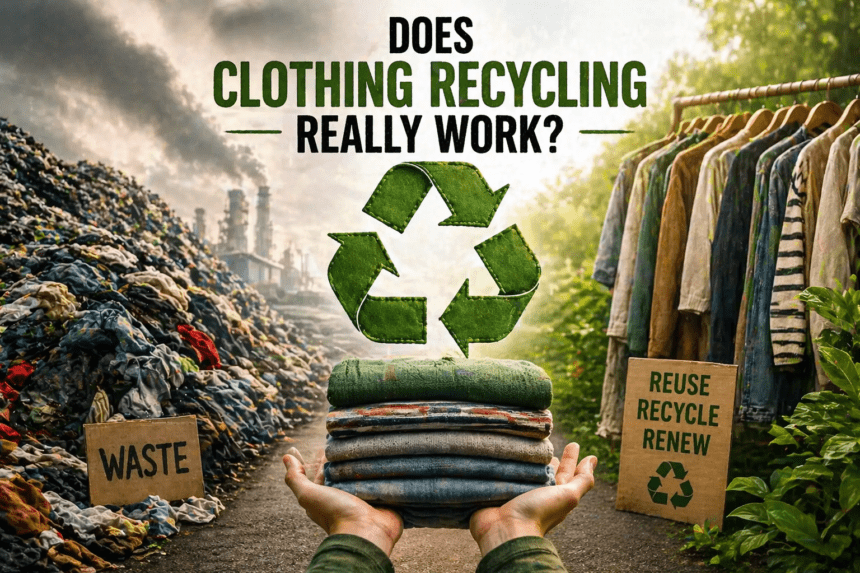
Clothing recycling does some good. It can keep part of the textile stream out of landfill, recover material from certain garments, and extend the life of clothes through reuse. But the bigger picture is much less impressive than many consumers assume. In practice, most old clothes are not turned back into new clothes on a large scale. A lot of what is collected is resold, exported, downcycled into lower-value products like insulation or rags, burned, or landfilled. The U.S. EPA says the recycling rate for clothing and footwear was about 13% in its latest cited figures, and textiles still make up millions of tons of waste sent to landfill or combustion.
The main reason is simple: clothes are hard to recycle well. Modern garments are often made from blended fibers like cotton-polyester, mixed trims, elastane, dyes, coatings, and accessories such as zippers or buttons. That makes sorting and material recovery technically difficult and expensive. Mechanical recycling can work for some cleaner, simpler streams, but it often shortens fibers and lowers quality. Newer chemical or advanced recycling methods are promising, though they are still not available at the scale needed to handle the mountains of textile waste the fashion industry produces.
That is why one of the most quoted numbers in this debate still matters: the Ellen MacArthur Foundation says less than 1% of old clothing is used to make new clothing. That does not mean all collection is fake or useless. It means the system is mostly not closed-loop. In other words, collection bins and take-back programs may move clothing around the waste chain, but they rarely create a true circular system where yesterday’s shirt becomes tomorrow’s shirt at scale.
Europe is trying to push the system in a more serious direction. The European Environment Agency says EU countries must set up separate collection systems for used textiles from 2025, but it also warns that better collection alone is not enough if it simply leads to more exports, incineration, or landfill. That is an important point, honestly. Collecting more clothes sounds good, but unless sorting, reuse markets, and real recycling capacity expand too, the problem just shifts location instead of shrinking.
There are signs of progress. Industry pilots and newer sorting technologies, including AI-assisted systems, are improving the ability to identify fibers and separate recyclable materials. Some recent reporting and industry projects suggest automation could cut the share of unrecyclable material in sorted streams and improve recovery rates. But these are still early or limited examples, not proof that the whole system already works well.
So the honest answer is this: clothing recycling works a little, reuse works better, and overproduction remains the real problem. The best environmental outcome usually comes from wearing clothes longer, buying fewer low-quality items, repairing what can be repaired, and designing garments that are easier to recycle in the first place. Recycling matters, yes. But right now, it is more of a partial safety net than a full solution.