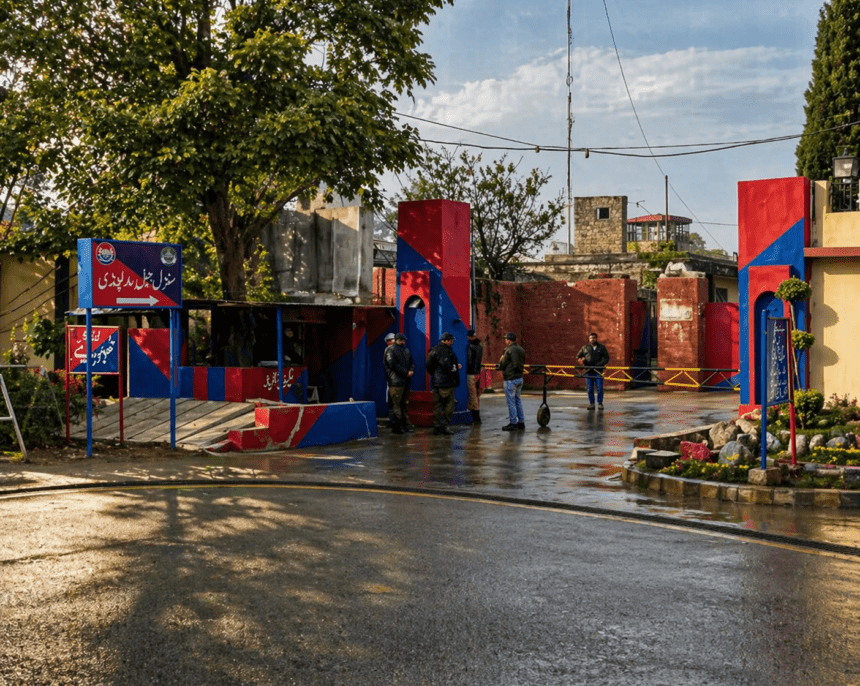
For the second Thursday in a row, no senior Pakistan Tehreek-e-Insaf leader turned up at Adiala Jail to meet jailed former prime minister Imran Khan, even though the visit fell on a court-designated day and the names of party heavyweights had already been submitted to prison authorities. Reports said the meeting window stayed open until the afternoon, but no one from the approved list appeared.
The no-show matters because these meetings are not informal drop-ins. The Islamabad High Court restored Khan’s twice-weekly visitation rights in March 2025, allowing meetings on Tuesdays and Thursdays under a structured arrangement. The court order was meant to regulate access while limiting who could attend and barring political point-scoring after the visits.
According to the latest reports, the list sent to jail authorities for Thursday’s meeting included Barrister Gohar Ali Khan, Salman Akram Raja, Latif Khosa, Babar Awan, Hamid Khan and Intizar Panjotha. Yet by the time the allotted hours expired, Adiala had seen no arrival from the PTI side. That, in itself, was enough to trigger fresh talk in Islamabad and Rawalpindi about whether the party’s internal communication is fraying at a delicate moment.
PTI figures tried to explain the absence, but the explanations did little to quiet the noise. One account said Gohar was in Lahore and Raja was tied up in court proceedings. What remained unanswered was the bigger question: why none of the other names on the approved list showed up either. That gap has given extra weight to speculation that the issue was not just scheduling, but a mix of access disputes, internal unease and plain disarray.
The episode comes against a longer pattern of complaints from PTI that court-ordered access to Khan has not been implemented consistently. In recent months, party leaders and members of Khan’s family have repeatedly said they were stopped from meeting him despite appearing on authorized days. Those complaints have surfaced often enough that each failed meeting now lands as more than an administrative hiccup; it feeds a broader narrative inside PTI that even written court relief has not guaranteed regular access.
Politically, the optics are rough for PTI. Khan remains the party’s central figure, and access to him carries obvious strategic value, especially when decisions on legal, organizational and electoral matters are tightly watched. So when a full slate of senior leaders fails to appear on a court-mandated day, it does not look minor. It looks like a party wrestling with competing priorities, or perhaps with tensions it would rather keep behind closed doors. That interpretation is an inference from the pattern of reporting, but it is one several outlets have pointed toward.
For now, the immediate fact is simple and hard to spin: another Thursday passed, the court-approved slot came and went, and Imran Khan did not meet the senior PTI leadership expected at Adiala Jail. Whether that was the result of obstruction, internal friction, or both, the fallout is the same. It deepens questions about who is managing access to the party founder, and whether PTI can project unity while its most important political figure remains behind bars.