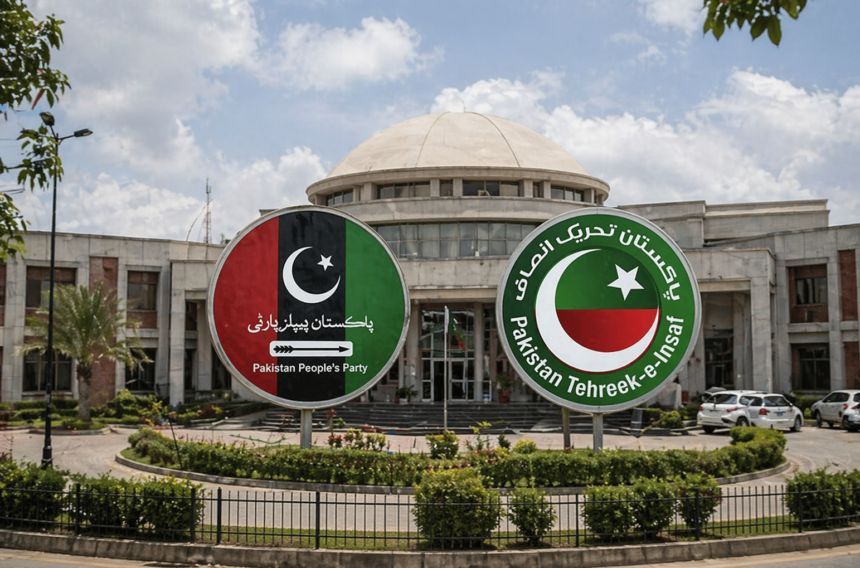
The Pakistan Peoples Party is stepping into the Gilgit-Baltistan election campaign with a clear objective: turn PTI’s internal collapse in the region into votes.
That is the real story behind the latest developments. PPP has formally activated its election machinery for the June 7, 2026, Gilgit-Baltistan Assembly polls by setting up a parliamentary board and interviewing ticket aspirants from key districts, signaling that it believes the field is unusually open this time.
PTI, by contrast, is heading into the campaign badly weakened. The sharpest blow came in February, when 14 influential figures led by former chief minister Haji Gulbar Khan quit PTI and joined the Istehkam-e-Pakistan Party, giving rivals fresh evidence that the party’s once-dominant structure in Gilgit-Baltistan has fractured.
That rupture did not come out of nowhere. PTI had already expelled Gulbar Khan and 11 other lawmakers in 2025 for violating party policy, deepening a split that had been building since the disqualification of former chief minister Khalid Khurshid. Analysts tracking the region’s politics say many figures associated with the PTI forward bloc have since been absorbed by rival camps, including PPP and PML-N, ahead of this year’s election.
PPP has been trying to convert that churn into momentum for months. Earlier political realignments in Gilgit-Baltistan saw several local leaders from PTI and PML-N join PPP, including former assembly speaker Fida Muhammad Nashad and other well-known regional figures, giving the party a broader local bench before the formal campaign even began.
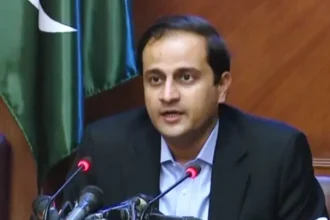
Now the party is moving from recruitment to selection. Bilawal Bhutto-Zardari constituted a 10-member parliamentary board this month to oversee ticket distribution, and party leaders say nominations will be decided on merit, loyalty, public service and electability. In practical political terms, PPP is trying to present itself as the most organized challenger at a moment when PTI is spending more energy dealing with defections than projecting unity.
The timing matters. Gilgit-Baltistan’s assembly elections were delayed after the original winter schedule became impractical, and the Election Commission later reset polling for June 7, 2026. That delay gave parties extra time to regroup, negotiate tickets and poach local notables a process that seems to have helped PPP more than PTI.
There is also a bigger historical contrast hanging over the campaign. PTI emerged from the 2020 Gilgit-Baltistan election as the dominant force, winning 16 of the 24 directly elected seats and later building a commanding position in the 33-member assembly. But that old advantage no longer looks secure. What once looked like a solid PTI power base now appears fragmented, with former allies scattered across competing parties.
So yes, PPP sees an opening and a serious one. But the “major blow” in this story is not a single rally or a one-day upset. It is the steady erosion of PTI’s organizational hold in Gilgit-Baltistan, followed by PPP’s attempt to harvest that damage before voters go to the polls in June. Whether that translates into seats is still an open question. The political ground, though, has plainly shifted.