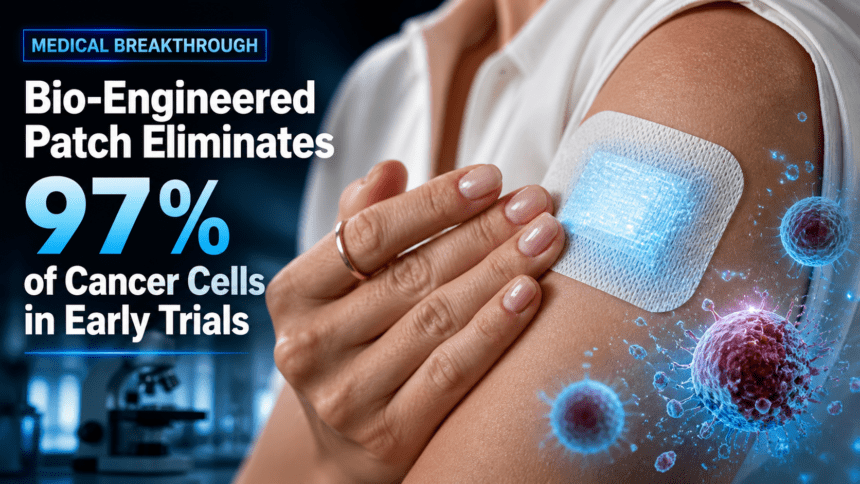
A team of researchers has developed a wearable patch capable of destroying 97% of cancer cells in localized tumors, potentially offering a non-invasive alternative to surgery. The device, which functions by delivering targeted immunotherapy directly through the skin, successfully eliminated aggressive tumor models in lab testing without the side effects typically associated with systemic chemotherapy.
The patch relies on a microneedle array that creates microscopic pathways into the skin. Once applied, it releases a cocktail of specialized antibodies and immune-boosting agents directly into the tumor microenvironment.
By concentrating the treatment at the site of the growth, the patch prevents the toxic “whole-body” impact that often leaves patients debilitated during traditional cancer treatments. For patients with localized tumors such as those found in early-stage melanoma or certain breast cancers—the implications are significant.
Surgery often carries risks of infection, scarring, and incomplete tumor removal. This patch bypasses the scalpel, offering a localized, controlled release of medication over several days. “We aren’t just killing the cells; we’re teaching the immune system to recognize the threat,” said one of the lead researchers involved in the project.
The mechanism works by prompting the body’s own T-cells to identify cancer markers, creating a localized “memory” that reduces the likelihood of the cancer returning once the patch is removed.
While the 97% efficacy rate recorded in initial trials is a major milestone, the transition from lab-grown models to human clinical trials remains the next hurdle. Researchers are currently working to scale the manufacturing process, ensuring the patch remains stable at room temperature and accessible for clinical use.
The team expects to initiate safety trials within the next eighteen months. If these results hold, the device could fundamentally shift how physicians approach localized oncology, moving away from invasive procedures toward simple, transdermal application. For now, the patch remains a laboratory success, but it represents the most viable path yet toward replacing the operating room with a bandage.