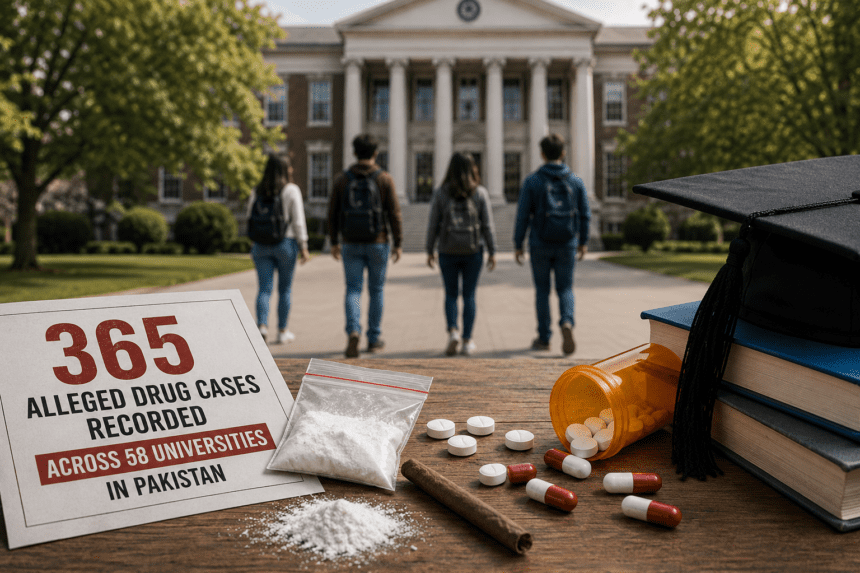
The Anti-Narcotics Force (ANF) and Higher Education Commission (HEC) have flagged a disturbing trend, reporting 365 active drug-related cases across 58 universities in Pakistan. These figures, compiled through recent intelligence reports, expose a widening crisis within campuses once considered safe havens for intellectual growth.
The data underscores a systemic failure to shield students from illicit substances. While the total number of cases stands at 365, officials admit this is likely the tip of the iceberg.
Many incidents go unreported due to institutional pressure to protect university reputations or a lack of robust internal monitoring mechanisms. “We aren’t just looking at isolated incidents of experimentation,” a senior ANF official said, requesting anonymity due to the sensitivity of ongoing investigations. “We are tracking organized supply chains that have successfully penetrated student hostels and faculty housing.
” The distribution of cases is not uniform. Urban centers, particularly in Islamabad, Lahore, and Karachi, report the highest density of incidents. Synthetic drugs specifically crystal meth and high-potency cannabis have replaced traditional narcotics as the primary commodities circulating on campus grounds. University administrations have faced mounting criticism for their reactive, rather than proactive, approach.
While the HEC issued revised guidelines last year mandating drug-testing protocols and the establishment of student counseling cells, implementation remains erratic. Some private institutions have resisted mandatory testing, citing privacy concerns and potential damage to enrollment numbers. The economic reality of these universities further complicates the issue. With many institutions struggling to maintain operational budgets, security and student welfare programs are often the first to face cuts.
This leaves campus security teams under-trained and ill-equipped to handle sophisticated drug rings that operate using encrypted messaging apps and discreet delivery networks. For the students, the impact is tangible. Academic performance reports from the affected institutions show a sharp decline in attendance and cognitive engagement among students identified in these cases.
The social fabric of these campuses is fraying, with peer-to-peer pressure acting as the primary engine for new users.
The government is now weighing a proposal to establish a dedicated task force, pairing law enforcement with campus security to create a “zero-tolerance” buffer zone around hostels. Whether this will disrupt the supply chains or simply push the trade further into the shadows remains the primary challenge for policymakers.
Until campuses move beyond issuing circulars and start auditing their own security failures, 365 cases will remain a grim baseline for a crisis that shows no signs of receding.