By using this site, you agree to the Privacy Policy and Terms of Use.
Accept
Media HydeMedia Hyde
  • Home
  • Politics
  • Education
  • Entertainment
  • Sports
  • Blogs
  • Business & Commerce
  • Others
    • Religious
    • Metropolitan
    • Climate and Weather
Font ResizerAa
Media HydeMedia Hyde
Font ResizerAa
  • Home
  • Politics
  • Education
  • Entertainment
  • Sports
  • Blogs
  • Business & Commerce
  • Others
    • Religious
    • Metropolitan
    • Climate and Weather
Follow US
© 2026 Media Hyde Network. All Rights Reserved.
Health

Pakistan’s First National Platform for the Medical Device Industry Inaugurated

Last updated: May 10, 2026 12:19 am
Neha Ashraf
Share
SHARE

‎A significant step toward industrial and public health reforms in Pakistan’s healthcare sector was witnessed with the inauguration of the country’s first national platform, the Institute of Pakistan Medical Device Industry.

‎The ceremony was attended by leading industrialists, academics, policymakers, and representatives from regulatory and public health institutions, marking the beginning of a structured national dialogue on the future of Pakistan’s healthcare manufacturing system.

‎The event served as a platform to bring together various stakeholders to strengthen Pakistan’s capabilities in medical technology, diagnostic systems, and healthcare innovation.

‎During the ceremony, speakers openly discussed the key challenges faced by the industry, including limited resources, inconsistent industrial support, and the need for more industry friendly and growth oriented policies.

‎Participants stated that without an effective framework to encourage innovation, investment, and local production, the healthcare sector would continue to struggle in meeting the needs of the rapidly growing population.

‎Representatives from the Drug Regulatory Authority of Pakistan (DRAP), Health Services Academy (HSA), COMSATS, and other prominent national institutions also attended the event and expressed strong confidence in the initiative.

‎They said that the establishment of a unified platform would play an important role in strengthening the strategic and operational foundations of Pakistan’s medical device industry.

‎One of the most discussed topics during the ceremony was the relationship between academia and industry. Speakers emphasized that effective collaboration between educational institutions and the healthcare manufacturing sector is essential for national development. Such partnerships would not only promote research and innovation but also contribute to human resource development by equipping students, researchers, and professionals with industry aligned practical skills.

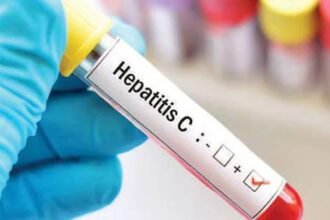
‎Special attention was also given to the public health aspect during the event. Participants expressed concern over the growing burden of diseases in Pakistan, particularly the spread of infectious diseases such as Hepatitis C and HIV. Discussions focused on the recent rise in HIV infections, along with challenges related to prevention, diagnosis, and access to treatment.

‎In this context, speakers stressed the need for locally developed and affordable healthcare solutions, stating that locally manufactured diagnostic technologies and medical devices could prove to be more practical, sustainable, and economically effective in addressing public health crises, particularly in underprivileged areas where access to treatment and affordability remain major barriers.

‎In the concluding remarks, the importance of national confidence in local programs and domestic manufacturing capabilities was highlighted.

‎Participants stated that if efforts against diseases such as Hepatitis C and HIV are strengthened through effective national policies, institutional collaboration, and trust in local industry, Pakistan can significantly improve the effectiveness of its public health policies.

‎The inauguration of the Institute of Pakistan Medical Device Industry is being described not merely as the establishment of an institution, but as the beginning of a broader movement toward self reliance in healthcare, industrial stability, and a sustainable public health future in Pakistan.


Share This Article
Email Copy Link Print
Previous Article Pfizer COVID-19 vaccine does not cause Hantavirus, experts clarify Pfizer COVID-19 vaccine does not cause Hantavirus, experts clarify
Next Article Factory Worker Crushed by Water Tanker in Karachi’s SITE Area Factory Worker Crushed by Water Tanker in Karachi’s SITE Area
Leave a Comment

Leave a Reply Cancel reply

Your email address will not be published. Required fields are marked *

Sponsored Ads

Stay Connected

FacebookLike
XFollow
InstagramFollow
YoutubeSubscribe
WhatsAppFollow
ThreadsFollow
Sindh Schools to Close for Two-Month Summer Break Starting June 1
Education
May 13, 2026
Pakistan Targets Tech Workforce with 20,000 AI Training Slots
Education
May 13, 2026
Tokyo University Launches Fully Autonomous Lab Where Robots Run the Show The lights are on at the University of Tokyo’s newest chemistry lab, but the lab coats are gone. In a move that signals a shift for experimental science, the university has officially opened a facility where robots handle the entire research cycle—from mixing chemicals to analyzing results—without a single human in the room. This isn’t just a room with a few automated arms. It’s a closed-loop system designed to hunt for new materials for batteries and semiconductors at speeds that make traditional methods look like they’re standing still. The AI designs the experiment, the robots execute it, and the data feeds right back into the AI to decide what happens next. "The goal is to remove the bottleneck of human physical labor," a researcher involved in the project’s pilot phase said. "A human can do maybe ten experiments a day. This system won't stop at ten, and it doesn't need to go home at 5:00 PM." The stakes are high. Japan is currently locked in a global race to find more efficient materials for the next generation of electric vehicle batteries. By cutting humans out of the "pipette-and-wait" cycle, the university expects to compress years of trial-and-error into a few weeks of non-stop robotic iteration. It’s a response to a looming crisis, too. Japan’s shrinking workforce means there are fewer young scientists entering the field every year. Automating the grunt work isn't just about speed; it’s about survival in a country where human talent is becoming a scarce resource. Critics often worry that "robot-run" means "job-lost," but the university’s lead engineers argue the opposite. They say the move frees up researchers to actually think, rather than spending eight hours a day performing repetitive liquid handling. The robots don't get bored, they don't make clerical errors, and they don't suffer from "Friday afternoon" fatigue that can ruin a data set. The lab is currently focused on thin-film materials, but the team plans to scale the technology to other branches of chemistry soon. If it works, the image of the lone scientist hunched over a workbench might soon be a relic of the past. The lab is running right now. It’ll be running tomorrow morning. And it won't need a coffee break to get through the night.
Tokyo University Launches Fully Autonomous Lab Where Robots Run the Show
Education
May 13, 2026
Pakistan Offers New Higher Education Scholarships to Bangladeshi Students
Education
May 13, 2026
Private Schools Defy Punjab Government’s Revised Summer Vacation Schedule
Education
May 13, 2026
HEC Drops Paperwork: Fully Online Degree Attestation Goes Live Nationwide
Education
May 13, 2026

You Might Also Like

Health

Anti Polio Campaign to Begin in 99 Districts from September 1st, Briefing Given to Mustafa Kamal ‎

By
Neha Ashraf
Health

Levies Officer Martyred in Firing on Polio Team in Swat

By
Neha Ashraf
Health

Kiwi vs Orange: Which Is Higher in Vitamin C?

By
Irma Khan
Health

AKU Medical College Dean Dr Karim Damji wins 2026 American Glaucoma Society Humanitarian Award

By
Irma Khan
Media Hyde Media Hyde Dark
Facebook Twitter Youtube Rss Medium

About US

Media Hyde Network: Your instant connection to breaking stories and live updates. Stay informed with our real-time coverage across politics, tech, entertainment, and more. Your reliable source for 24/7 News.

Top Categories
  • Headline
  • Politics
  • Entertainment
  • Education
  • Sports
  • Religious
  • Metropolitan
  • Climate and Weather
Usefull Links
  • Contact Us
  • Disclaimer
  • Privacy Policy
  • Cookies Policy
  • Advertising Policy
  • Terms & Conditions

© 2025 Media Hyde Network. All Rights Reserved.

Welcome Back!

Sign in to your account

Username or Email Address
Password

Lost your password?