By using this site, you agree to the Privacy Policy and Terms of Use.
Accept
Media HydeMedia Hyde
  • Home
  • Politics
  • Education
  • Entertainment
  • Sports
  • Blogs
  • Business & Commerce
  • Others
    • Religious
    • Metropolitan
    • Climate and Weather
Font ResizerAa
Media HydeMedia Hyde
Font ResizerAa
  • Home
  • Politics
  • Education
  • Entertainment
  • Sports
  • Blogs
  • Business & Commerce
  • Others
    • Religious
    • Metropolitan
    • Climate and Weather
Follow US
© 2026 Media Hyde Network. All Rights Reserved.
Health

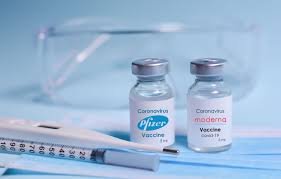
Pfizer COVID-19 vaccine does not cause Hantavirus, experts clarify

Last updated: May 10, 2026 12:18 am
Misbah Jogyat
Share
Pfizer COVID-19 vaccine does not cause Hantavirus, experts clarify
SHARE

Viral social media claims linking Pfizer’s COVID-19 vaccine to Hantavirus infections have no basis in medical science.Public health agencies and infectious disease experts confirm the two are biologically unrelated, dismissing the rumors as misinformation. Hantavirus is a rodent-borne illness. It spreads through contact with the urine, droppings, or saliva of infected deer mice and other rodents.

It is not a vaccine-preventable disease, nor is it a potential side effect of mRNA technology. “There is no mechanism by which a COVID-19 vaccine could trigger a Hantavirus infection,” said Dr. Elena Rodriguez, a clinical immunologist who has tracked vaccine safety data since 2020. “These are two entirely different pathogens with completely different transmission routes.” Social media posts began circulating the theory last month, citing “internal documents” that have never been authenticated.

Fact-checking organizations, including the CDC and independent medical researchers, have traced the origin of these posts to accounts known for spreading health-related conspiracy theories.

The CDC maintains a rigorous Vaccine Adverse Event Reporting System (VAERS). Since the start of the global rollout, millions of doses of the Pfizer-BioNTech vaccine have been administered. Hantavirus has not appeared in any verified reports of adverse reactions.

The confusion appears to stem from a misunderstanding of how vaccines interact with the immune system.

While vaccines stimulate an immune response, they do not create an environment where unrelated viral or bacterial pathogens like Hantavirus can suddenly manifest.

Health officials warn that relying on social media for medical diagnosis can delay necessary care. Hantavirus Pulmonary Syndrome (HPS), the most severe form of the infection, requires early medical intervention.

If someone suspects exposure to rodent droppings, they should contact a doctor immediately rather than searching for connections to unrelated pharmaceuticals. Misinformation often thrives on conflating unrelated medical terms, but the science remains definitive  a vaccine designed to combat a respiratory coronavirus cannot and does not induce a rodent-borne viral infection.


Share This Article
Email Copy Link Print
Previous Article Proposal Made for Airport Screening of Deported Passengers to Prevent HIV Spread
Next Article Pakistan’s First National Platform for the Medical Device Industry Inaugurated
Leave a Comment

Leave a Reply Cancel reply

Your email address will not be published. Required fields are marked *

Sponsored Ads

Stay Connected

FacebookLike
XFollow
InstagramFollow
YoutubeSubscribe
WhatsAppFollow
ThreadsFollow
Sindh Schools to Close for Two-Month Summer Break Starting June 1
Education
May 13, 2026
Pakistan Targets Tech Workforce with 20,000 AI Training Slots
Education
May 13, 2026
Tokyo University Launches Fully Autonomous Lab Where Robots Run the Show The lights are on at the University of Tokyo’s newest chemistry lab, but the lab coats are gone. In a move that signals a shift for experimental science, the university has officially opened a facility where robots handle the entire research cycle—from mixing chemicals to analyzing results—without a single human in the room. This isn’t just a room with a few automated arms. It’s a closed-loop system designed to hunt for new materials for batteries and semiconductors at speeds that make traditional methods look like they’re standing still. The AI designs the experiment, the robots execute it, and the data feeds right back into the AI to decide what happens next. "The goal is to remove the bottleneck of human physical labor," a researcher involved in the project’s pilot phase said. "A human can do maybe ten experiments a day. This system won't stop at ten, and it doesn't need to go home at 5:00 PM." The stakes are high. Japan is currently locked in a global race to find more efficient materials for the next generation of electric vehicle batteries. By cutting humans out of the "pipette-and-wait" cycle, the university expects to compress years of trial-and-error into a few weeks of non-stop robotic iteration. It’s a response to a looming crisis, too. Japan’s shrinking workforce means there are fewer young scientists entering the field every year. Automating the grunt work isn't just about speed; it’s about survival in a country where human talent is becoming a scarce resource. Critics often worry that "robot-run" means "job-lost," but the university’s lead engineers argue the opposite. They say the move frees up researchers to actually think, rather than spending eight hours a day performing repetitive liquid handling. The robots don't get bored, they don't make clerical errors, and they don't suffer from "Friday afternoon" fatigue that can ruin a data set. The lab is currently focused on thin-film materials, but the team plans to scale the technology to other branches of chemistry soon. If it works, the image of the lone scientist hunched over a workbench might soon be a relic of the past. The lab is running right now. It’ll be running tomorrow morning. And it won't need a coffee break to get through the night.
Tokyo University Launches Fully Autonomous Lab Where Robots Run the Show
Education
May 13, 2026
Pakistan Offers New Higher Education Scholarships to Bangladeshi Students
Education
May 13, 2026
Private Schools Defy Punjab Government’s Revised Summer Vacation Schedule
Education
May 13, 2026
HEC Drops Paperwork: Fully Online Degree Attestation Goes Live Nationwide
Education
May 13, 2026

You Might Also Like

Health

Molecule Discovered in Guava That Fights Cancer

By
Neha Ashraf
Health

5 Dangerous Habits that Destroy Intestinal Health

By
Irma Khan
Health

Multan: 57 More Children Diagnosed with Pneumonia in 24 Hours

By
Neha Ashraf
Health

In the next 10 years, no one in the world will die of cancer, but people in Pakistan will still be dying, says the Health Minister

By
Neha Ashraf
Media Hyde Media Hyde Dark
Facebook Twitter Youtube Rss Medium

About US

Media Hyde Network: Your instant connection to breaking stories and live updates. Stay informed with our real-time coverage across politics, tech, entertainment, and more. Your reliable source for 24/7 News.

Top Categories
  • Headline
  • Politics
  • Entertainment
  • Education
  • Sports
  • Religious
  • Metropolitan
  • Climate and Weather
Usefull Links
  • Contact Us
  • Disclaimer
  • Privacy Policy
  • Cookies Policy
  • Advertising Policy
  • Terms & Conditions

© 2025 Media Hyde Network. All Rights Reserved.

Welcome Back!

Sign in to your account

Username or Email Address
Password

Lost your password?