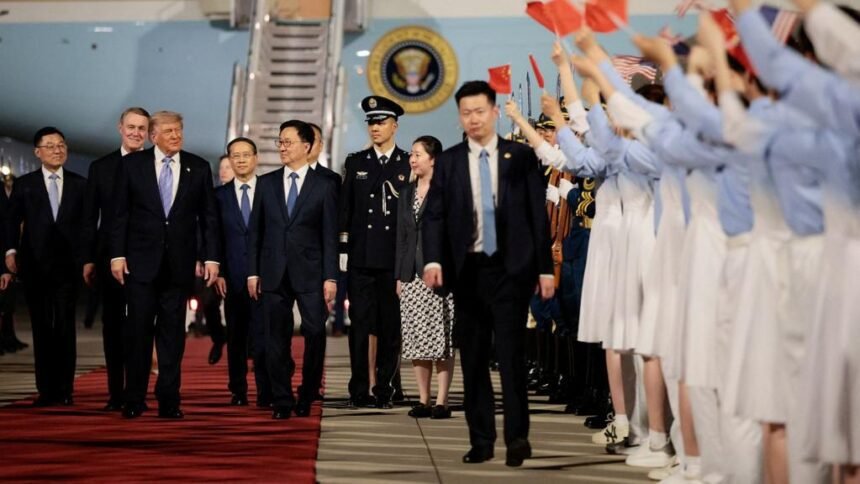
Donald Trump arrived in Beijing Wednesday, greeted by a military band and a lavish “state visit-plus” reception that marks the most critical leg of his five-nation Asia tour.
The pomp is deliberate. Xi Jinping, fresh from a party congress that cemented his status as China’s most powerful leader in decades, wants to show a stable, rising superpower.
Trump is looking for a win he can take back to Washington. He’s carrying a list of grievances: a massive trade deficit and Beijing’s perceived hesitation to fully squeeze North Korea’s nuclear program. “The president is clear-eyed about the challenges,” a senior administration official said shortly after landing.
“He’s not here for a photo-op. He’s here for movement on the deficit and real pressure on Pyongyang.” The two leaders met for tea at the Forbidden City before a private dinner a rare honor for a foreign head of state.
It’s a calculated charm offensive. But behind the gold-leafed doors, the math is harder to ignore. American business leaders traveling with Trump are expected to sign deals worth billions, yet critics argue these are often “memorandums of understanding” that do little to address the structural issues of market access and intellectual property theft.
On North Korea, the tension is palpable. Trump has spent months alternating between praising Xi and accusing China of doing “nothing” to stop Kim Jong Un. Beijing argues it’s doing its part and fears a total collapse of the North would send refugees flooding across its border.
The dynamic has shifted since their first meeting at Mar-a-Lago. Xi is no longer the new player on the scene; he’s the architect of a “New Era” for China. Trump, facing domestic pressure and a looming election cycle, needs more than just a red carpet to call this trip a success.
The meetings continue tomorrow. Whether the “state visit-plus” treatment translates into policy shifts or remains a high-end exercise in optics is what the markets and the Pentagon are watching.