Scientists Use Microscopic Volcanic Glass to Understand How Early Humans Survived the Toba Disaster
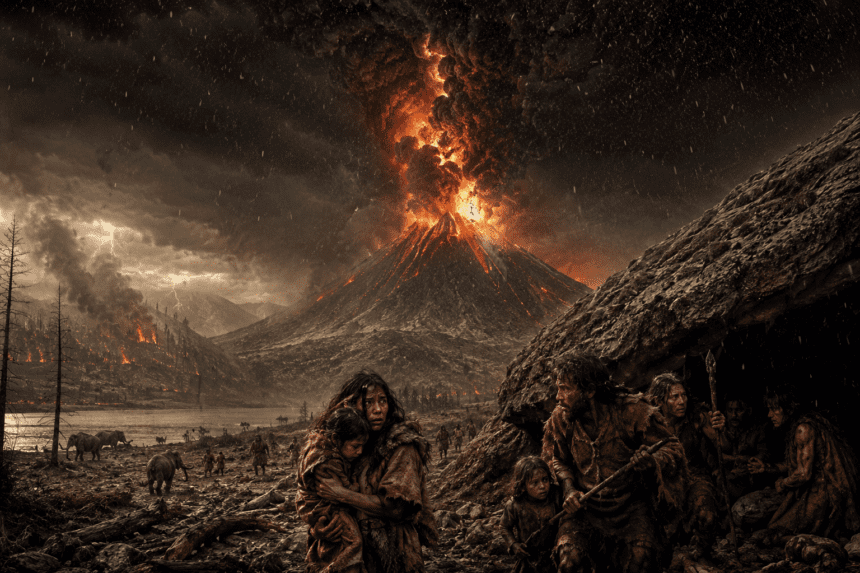
A massive volcanic eruption that occurred around 74,000 years ago may have pushed humanity to the brink of extinction, according to archaeologists studying one of the most catastrophic natural disasters in Earth’s history.
The event, known as the Toba supereruption, took place in present-day Indonesia and is considered one of the largest volcanic eruptions in the last 2.5 million years. Scientists estimate the eruption blasted nearly 2,800 cubic kilometers of ash into the atmosphere — more than 10,000 times larger than the 1980 eruption of Mount St. Helens.
Researchers say the eruption likely darkened skies worldwide, triggered years of global cooling, contaminated water supplies with acid rain, and devastated ecosystems across large parts of the planet.
According to archaeologist Jayde N. Hirniak of Arizona State University, scientists are still trying to understand exactly how early humans managed to survive such an extreme event.
Did Humans Nearly Go Extinct?
One major theory, known as the Toba catastrophe hypothesis, suggests the eruption caused a volcanic winter lasting up to six years and dramatically reduced the global human population.
Some genetic studies indicate that humans experienced a severe “genetic bottleneck” around this time, meaning population numbers may have fallen to fewer than 10,000 individuals worldwide. Such events reduce genetic diversity and can reshape the future of a species.
However, archaeologists and climate scientists continue debating whether the Toba eruption alone caused this population collapse.
Tiny Volcanic Glass Holds Big Clues
To investigate the eruption’s true impact, scientists study microscopic volcanic glass fragments known as cryptotephra. These tiny particles traveled thousands of miles from the eruption site and became buried in soil and archaeological layers around the world.
Researchers carefully extract the invisible glass shards from dirt samples using laboratory tools and then analyze their chemical composition to match them to specific volcanic eruptions.
The volcanic material acts like a timestamp, helping scientists determine whether humans were living in certain areas before, during, and after the eruption.
Evidence Shows Humans Adapted and Survived
Archaeological discoveries suggest early humans may have been far more resilient than previously believed.
At sites in South Africa, including Pinnacle Point, evidence shows humans continued occupying the area throughout the eruption period. Researchers even found signs of increased human activity and new technological developments after the disaster.
Similar findings have emerged from archaeological sites in Ethiopia, where ancient communities adapted to harsh environmental conditions by fishing in seasonal waterholes and adopting bow-and-arrow technology.
Scientists have also uncovered related evidence in India and China, suggesting human populations across several regions managed to survive and adapt despite the global environmental chaos.
Lessons for the Future
Experts say studying ancient disasters like Toba could help modern societies prepare for future catastrophic eruptions.
Today, organizations such as the United States Geological Survey and the Global Volcanism Program continuously monitor volcanoes around the world to provide early warnings and reduce risks.
Researchers believe the story of Toba ultimately highlights humanity’s greatest strength: adaptability in the face of extreme environmental catastrophe.