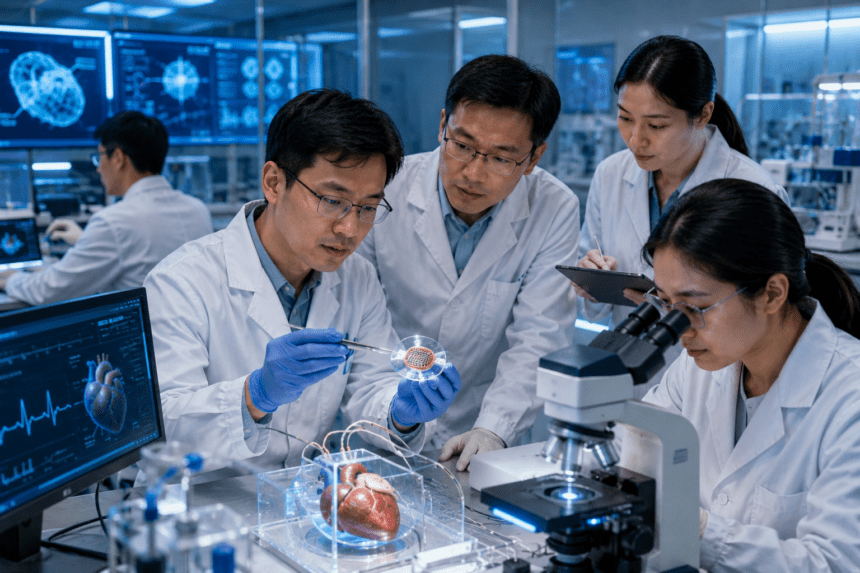
Researchers from the Chinese Academy of Sciences have reportedly developed a new “biological pacemaker” technology capable of controlling and regulating heartbeat activity, marking a significant advancement in cardiovascular and regenerative medicine research.
According to Chinese researchers, the experimental biological pacemaker is designed to function as a natural alternative to traditional electronic pacemakers, which are commonly used to treat patients suffering from irregular heart rhythms and certain cardiac disorders. Scientists say the new approach aims to use biological cells and genetic engineering techniques to restore or regulate heart function more naturally inside the body.
Traditional pacemakers rely on electronic devices implanted into patients to maintain stable heart rhythms. However, researchers say biological pacemakers could potentially reduce some long-term complications associated with hardware-based devices, including battery limitations, surgical replacements, infection risks, and mechanical failures.
The research team reportedly used advanced biotechnology and cellular engineering methods to create specialized heart cells capable of generating electrical signals similar to the body’s natural pacemaker system. Early experimental findings suggest the biological system may successfully help regulate heartbeat patterns under controlled conditions.
Medical experts say the development could represent an important step toward future regenerative treatments for cardiovascular diseases, which remain among the leading causes of death worldwide. Scientists believe biological pacemakers may eventually offer more adaptive and physiologically responsive solutions compared to conventional implanted devices.
However, researchers also cautioned that the technology is still in experimental stages and requires extensive clinical testing before it can be considered safe and effective for widespread human use. Further studies will likely focus on long-term stability, safety, immune response, and overall treatment effectiveness.
The announcement has generated significant interest within the global medical and scientific community, with experts describing it as a promising breakthrough in bioengineering and cardiac medicine. The development also highlights China’s growing investment in advanced biotechnology, medical innovation, and regenerative healthcare research.
If future trials prove successful, biological pacemakers could potentially transform treatment options for millions of heart patients worldwide in the coming years.