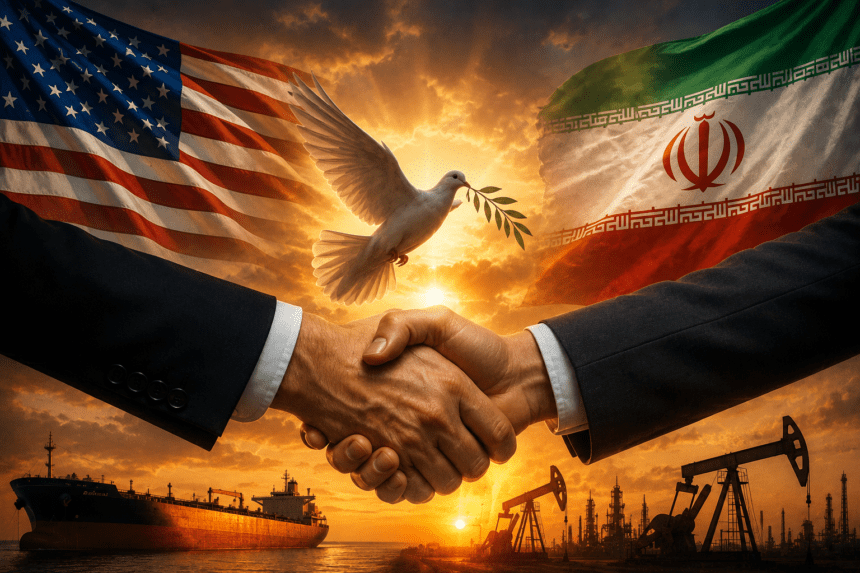
Washington: The United States and Iran are close to signing a proposed deal that would extend the current ceasefire by 60 days, reopen the Strait of Hormuz and allow Tehran to sell oil freely during the temporary truce.
The draft arrangement, reportedly based on a memorandum of understanding, is aimed at preventing a return to full-scale fighting while giving both sides time to negotiate broader issues, including Iran’s nuclear programme. Under the proposed deal, Iran would reopen the Strait of Hormuz and clear mines it had deployed in the waterway, while ships would be allowed to pass without tolls.
In return, the United States would lift its blockade on Iranian ports and issue sanctions waivers allowing Iran to resume oil sales during the 60-day ceasefire period. Reports said Washington could also consider limited sanctions relief and the unfreezing of some Iranian assets if the process moves forward.
The Strait of Hormuz has been the most sensitive pressure point in the crisis. It is one of the world’s most important energy routes, and any prolonged disruption there can shake oil and gas markets far beyond the Middle East. Reopening the strait would bring some relief to global markets, though analysts warn full energy flows may take time to return to normal.
The proposed deal also includes nuclear-related understandings. Iran would reportedly give commitments not to pursue nuclear weapons, while talks would begin on suspending uranium enrichment and reducing its stockpile of highly enriched uranium. Some of these assurances were described as verbal commitments passed through mediators, meaning the details may still need to be written into a final text.
President Donald Trump separately said a deal with Iran and the reopening of the Strait of Hormuz had been “largely negotiated,” though the final agreement was still subject to approval and last-minute changes.
The White House had not immediately commented on the report, and it remains unclear whether Tehran has formally accepted all parts of the draft. That uncertainty matters. A framework can look strong on paper, but deals involving ceasefires, sanctions, oil exports and nuclear limits often run into trouble when wording, verification and enforcement are discussed.
Regional mediation appears to have played a role in moving the talks forward. Several countries, including Pakistan, Qatar and Egypt, have reportedly been involved in diplomatic efforts to keep the ceasefire alive and push both sides toward a broader settlement.
If signed, the deal would not end every dispute between Washington and Tehran. But it could freeze the fighting, ease pressure on energy markets and create a short window for serious nuclear negotiations.
For now, the message is cautious but significant: the US and Iran may be closer than they have been in weeks to pulling the conflict back from the edge.