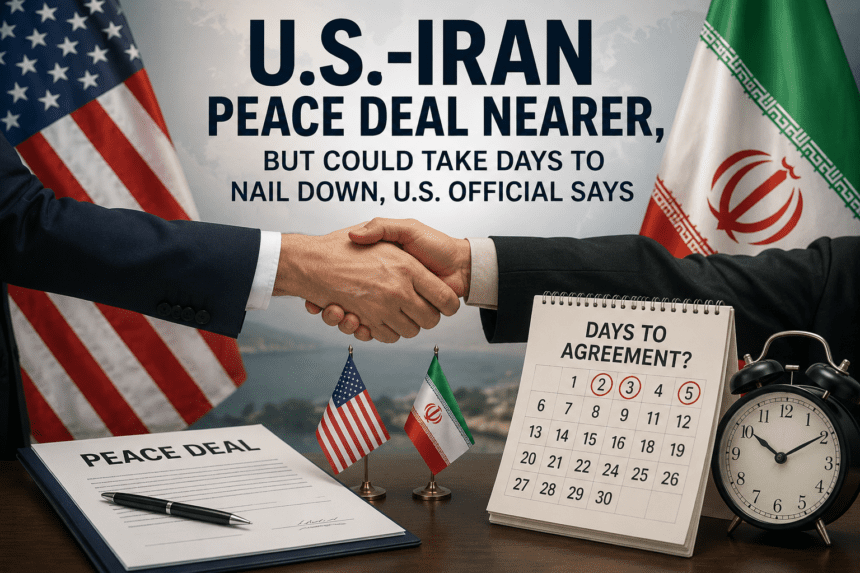
WASHINGTON: The United States and Iran appear to be inching toward a possible agreement to end their latest confrontation, though officials on both sides are warning that a final deal is not there yet — and may still take several days to lock down.
A senior U.S. official said the two sides had moved “nearer” to an understanding, with discussions focused on reopening the Strait of Hormuz, easing the U.S. naval blockade, and setting up a framework for wider talks on Iran’s nuclear program. Axios reported that the White House believes a deal could be finalized within days, but acknowledged it could still fall apart.
Iran struck a more cautious tone. Foreign Ministry spokesperson Esmaeil Baghaei said Monday that conclusions had been reached on “many topics” in a possible memorandum with Washington, but stressed that no agreement was imminent. He also said inconsistent U.S. positions were complicating the process.
President Donald Trump has signaled optimism, saying the framework of a deal had been “largely negotiated,” but he also made clear that Washington would not rush. For now, the U.S. blockade remains in place.
Secretary of State Marco Rubio added pressure to the talks, saying the U.S. prefers diplomacy but will find “another way” if negotiations fail.
The emerging arrangement reportedly includes reopening the Strait of Hormuz, phased sanctions relief, and further negotiations over Iran’s uranium enrichment. That last point remains sensitive. Tehran insists its nuclear program is peaceful, while Washington wants stronger limits and verification.
Oil markets have already reacted to the possibility of a breakthrough, with prices easing as traders bet on reduced disruption in the Gulf. But diplomats know this is still fragile. A deal may be closer than it was last week — not done, not safe, and certainly not guaranteed.