New Delhi, May 25 — Indian Finance Minister Nirmala Sitharaman on Monday called for sharper attention on three pressure points — fuel, fertiliser and foreign exchange — as the widening Middle East conflict threatens to unsettle India’s external balances, energy costs and farm input supplies.
Speaking at an event marking the 37th anniversary of the Small Industries Development Bank of India, Sitharaman said the government was watching the situation closely, while also cautioning against panic. India, she argued, could manage the stress, but only if households, businesses and policymakers stayed alert to where the pressure was building.
“There is a need to focus on the three Fs — fuel, fertiliser and forex,” Sitharaman said, according to reports on her remarks. She also pushed back at alarmist commentary around the crisis, saying India “cannot afford fear mongering” at a time when confidence matters as much as policy action.
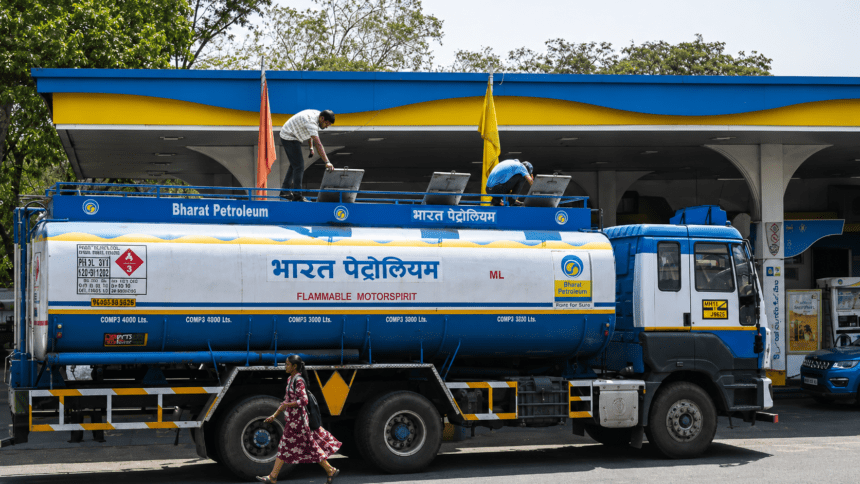
The warning comes as the war in West Asia has disrupted energy markets and raised concerns over shipping routes, particularly around the Strait of Hormuz, one of the world’s most important oil transit chokepoints. India is among the countries most exposed to such a shock because it depends heavily on imported crude oil. A prolonged disruption means costlier fuel, a bigger import bill and, eventually, pressure on the rupee.
Prime Minister Narendra Modi had earlier urged citizens to limit fuel use, reduce non-essential overseas travel and avoid discretionary imports such as gold in order to conserve foreign exchange. He also asked farmers to cut fertiliser use, a politically sensitive appeal in a country where farm costs quickly become a national issue.
Sitharaman’s “3Fs” framing brings those concerns into one basket. Fuel is the immediate worry. Fertiliser is the rural and food-security concern. Forex is the buffer that determines how long India can absorb the shock without tougher import restrictions, deeper subsidy costs or sharper currency pressure.
The finance minister also pointed to the fiscal cost of shielding consumers from rising prices. Reports citing her remarks said fuel excise duty cuts could cost the government nearly ₹1 lakh crore in revenue, a sizeable hit when New Delhi is already trying to manage welfare spending, infrastructure investment and deficit targets.
For households, the first sign of the crisis is usually petrol, diesel and cooking fuel. For farmers, it is fertiliser availability and price. India imports key fertiliser inputs and remains exposed to global supply swings, especially in urea, phosphates and energy-linked production costs. Reuters has reported that urea fertilisers account for more than half of global nitrogen fertiliser use, making any disruption a serious issue for crops such as rice, wheat and maize.
That is why Sitharaman’s remarks matter beyond the usual economic language. The coming weeks could test how well India balances consumer relief with fiscal discipline. Cutting fuel taxes helps people in the short run, but it also drains government revenue. Holding prices too high, on the other hand, risks inflation and public anger. It’s a narrow road.
The foreign exchange angle may be even more delicate. India’s import bill tends to rise sharply when crude oil prices climb, and that can widen the current account deficit. A weaker rupee then makes imports even more expensive. That loop is exactly what policymakers will want to avoid.
Industry groups have also begun flagging the same chain reaction: fuel costs feed into fertiliser, fertiliser costs feed into food prices, and all of it eventually shows up in inflation, government spending and household budgets.
Still, Sitharaman insisted that India’s economy remains resilient. The message from the finance ministry was not that a crisis has already overwhelmed the country, but that the government wants citizens and businesses to prepare for a rougher external environment.
For now, New Delhi appears to be relying on a mix of conservation appeals, tax adjustments, import management and close monitoring of strategic supplies. But if the conflict drags on, the pressure on the “3Fs” could become harder to manage — and much more visible in everyday life.