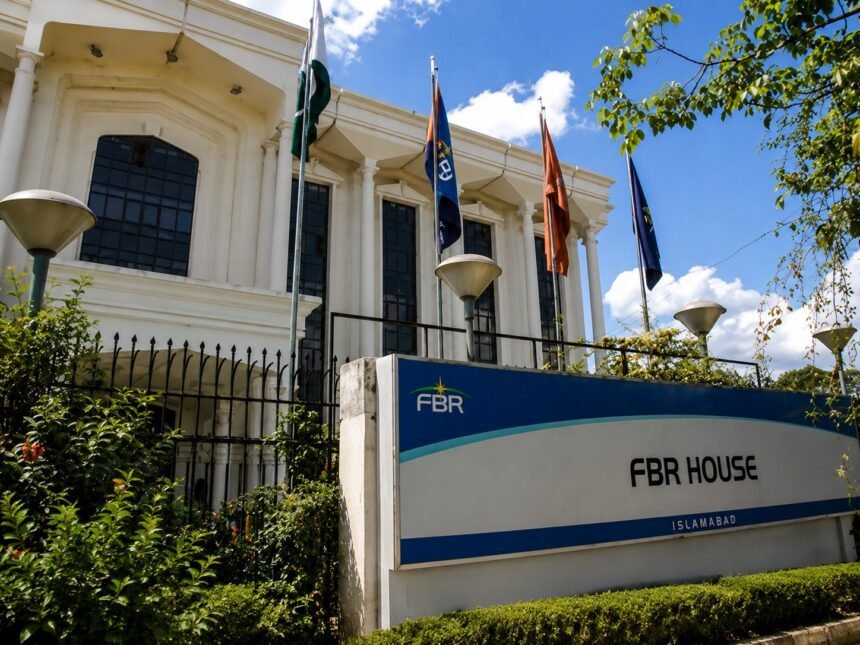
Pakistan’s Federal Board of Revenue missed its revised revenue target for May 2026 by around Rs28 billion, adding fresh pressure on the government just days before the next federal budget.
According to provisional figures reported by local business media, the FBR collected about Rs967 billion in May, against a revised monthly target of roughly Rs994 billion. The collection was still higher than last year’s May figure of Rs906 billion, showing year-on-year growth of around 7%, but it was not enough to meet the target.
The miss matters because Pakistan is already under pressure to raise tax revenue, reduce fiscal gaps and satisfy commitments linked to its economic programme. A single monthly shortfall may not sound dramatic on its own, but the problem is bigger when seen with the full-year picture.
For the July–May period of the current fiscal year, reports suggest the FBR’s cumulative shortfall has widened significantly. Business Recorder reported provisional collection of around Rs11.227 trillion against a revised target of Rs12.095 trillion, leaving a gap of about Rs868 billion. Other reports placed the broader shortfall close to Rs864 billion, depending on the target base used.
There is also some confusion in reported numbers because different outlets are comparing May’s collection with different targets. Some are using the revised monthly target of around Rs994 billion, which gives the Rs28 billion shortfall. Others are comparing the collection with the original monthly target of around Rs1.150 trillion, which shows a much larger gap. That distinction is important, especially for readers trying to understand the real budget pressure.
The government has already revised the annual revenue target downward. Dawn reported that the target has been cut to around Rs13 trillion, compared with the original budget estimate of Rs14.131 trillion. Even after that revision, the FBR still appears to be struggling to keep pace.
The latest miss comes at a sensitive time. Pakistan is preparing the next federal budget, and tax policy is expected to be one of the most difficult parts of the exercise. Policymakers may have to choose between increasing pressure on existing taxpayers, improving enforcement, withdrawing exemptions, or introducing new measures to raise revenue.
For businesses and salaried taxpayers, that is not exactly comforting. Many already complain that the tax burden falls too heavily on documented sectors, while large parts of the economy remain outside the formal tax net. Unless enforcement improves, new targets may once again translate into higher pressure on those already paying.
The FBR’s May performance shows the challenge clearly: revenue is growing, but not fast enough to match official expectations. With only one month left in the fiscal year, the gap is now too large to ignore.