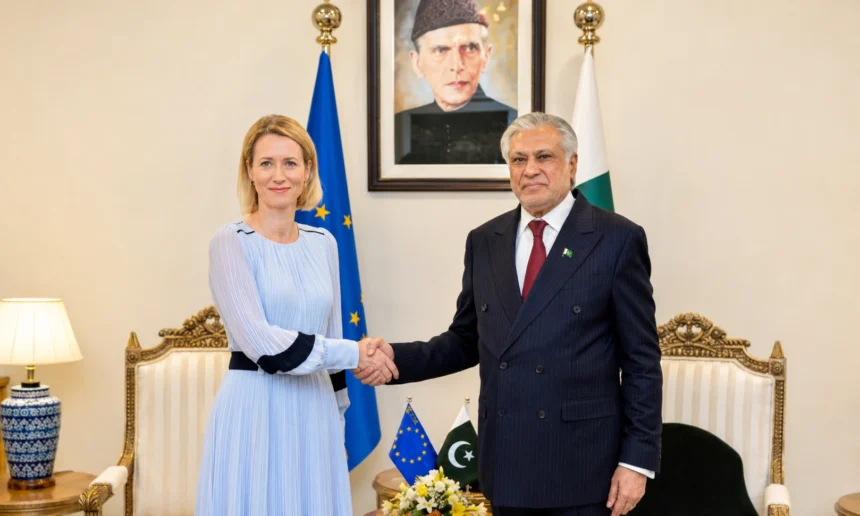
EU labels Pakistan a ‘major regional power’ and key strategic partner
BRUSSELS — The European Union has formally recalibrated its diplomatic posture toward Islamabad, labeling Pakistan a “major regional power” and an indispensable partner for stability in South Asia.
The shift, signaled by top EU diplomatic officials this week, marks a move away from purely transactional engagement. Instead, Brussels is positioning its relationship with Pakistan as a cornerstone of its broader Indo-Pacific strategy. The move comes as the EU attempts to diversify its geopolitical footprint, looking beyond traditional alliances to secure trade routes and manage regional security fallout.
The assessment hinges on Pakistan’s unique geography and its ability to influence outcomes in Afghanistan and the wider Central Asian corridor. EU envoys acknowledge that while domestic economic turbulence remains a hurdle, Pakistan’s role as a bridge between the Middle East and East Asia makes it impossible to ignore.
“We aren’t just looking at a country facing internal challenges,” said a senior EU diplomatic source familiar with the policy shift. “We are looking at a state that anchors a volatile region. Ignoring that reality isn’t an option for Brussels anymore.”
The partnership is expected to move beyond the GSP+ trade status that has defined the relationship for the last decade. Discussions are now pivoting toward climate resilience, renewable energy technology, and security cooperation — areas where the EU sees a direct benefit to its own interests.
Critics, however, point to the lingering concerns over political stability and human rights. Brussels has been careful to frame this “important partner” status as a two-way street, noting that deeper cooperation will require Islamabad to meet specific governance benchmarks.
The real test for this upgraded relationship won’t be the rhetoric in Brussels, but the actual capital flow and security cooperation that follows. For now, the EU has made its intent clear: it is betting on Pakistan’s long-term regional relevance.
Whether that bet pays off depends on how quickly Islamabad can translate this diplomatic goodwill into tangible reforms at home.