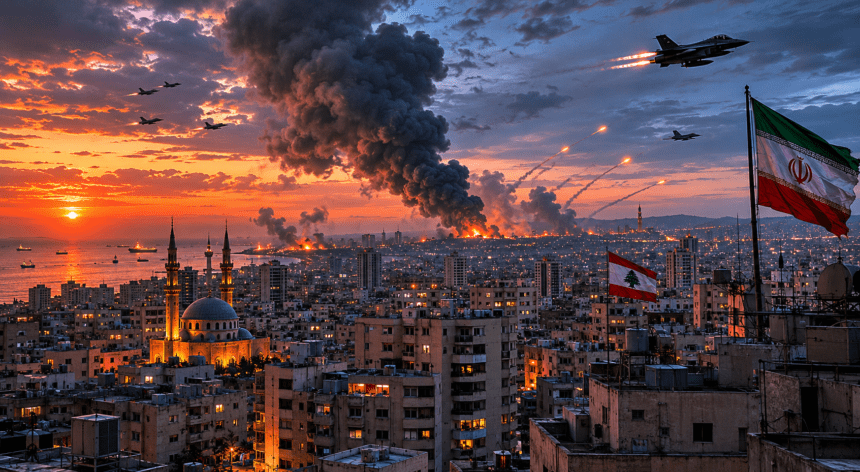
Middle East tensions remained high as Israel appeared to step back from an earlier threat to launch a major strike on Beirut, raising hopes for a temporary easing of hostilities in the region. The development comes amid ongoing diplomatic efforts aimed at preventing a broader conflict involving multiple regional actors.
Officials and international mediators have been working to reduce tensions following recent exchanges of threats and military actions. Concerns had grown after warnings of potential strikes on targets in and around Beirut, prompting fears of further instability and humanitarian consequences.
According to reports, discussions involving regional and international stakeholders have encouraged both sides to avoid major escalation. While military activity continues in some areas, the apparent decision to refrain from a large-scale strike on Beirut has been viewed as a positive step toward de-escalation.
The situation remains fluid, with military forces maintaining a high level of readiness. Analysts warn that any new incident could quickly reignite tensions and complicate ongoing diplomatic initiatives aimed at securing a broader ceasefire.
International leaders have called for restraint and renewed dialogue, emphasizing the need to protect civilians and prevent the conflict from spreading further across the region. Humanitarian organizations continue to monitor developments closely as communities affected by the unrest face uncertainty.
Despite signs of a possible reduction in immediate threats, experts caution that lasting stability will require sustained diplomatic engagement and commitments from all parties involved. The coming days are expected to be critical in determining whether current efforts can lead to a more durable reduction in hostilities.
Diplomatic Efforts Intensify as Concerns Grow Over Wider Conflict
Middle East tensions remained high as Israel appeared to step back from an earlier threat to launch a major strike on Beirut, raising hopes for a temporary easing of hostilities in the region. The development comes amid ongoing diplomatic efforts aimed at preventing a broader conflict involving multiple regional actors.
Officials and international mediators have been working to reduce tensions following recent exchanges of threats and military actions. Concerns had grown after warnings of potential strikes on targets in and around Beirut, prompting fears of further instability and humanitarian consequences.
According to reports, discussions involving regional and international stakeholders have encouraged both sides to avoid major escalation. While military activity continues in some areas, the apparent decision to refrain from a large-scale strike on Beirut has been viewed as a positive step toward de-escalation.
The situation remains fluid, with military forces maintaining a high level of readiness. Analysts warn that any new incident could quickly reignite tensions and complicate ongoing diplomatic initiatives aimed at securing a broader ceasefire.
International leaders have called for restraint and renewed dialogue, emphasizing the need to protect civilians and prevent the conflict from spreading further across the region. Humanitarian organizations continue to monitor developments closely as communities affected by the unrest face uncertainty.
Despite signs of a possible reduction in immediate threats, experts caution that lasting stability will require sustained diplomatic engagement and commitments from all parties involved. The coming days are expected to be critical in determining whether current efforts can lead to a more durable reduction in hostilities.