GENEVA — For decades, this lakeside Swiss city sold something few places could: neutrality, discretion, and a strange kind of global gravity. Wars were discussed here. Treaties were shaped here. Humanitarian agencies, rights monitors, trade negotiators, refugee officials — they all made Geneva feel less like a city and more like an operating system for diplomacy.
Now that system is creaking. Funding cuts across the United Nations, driven in large part by a sharp pullback from major donors led by the United States, are forcing layoffs, relocations and a broader rethink of whether Geneva can still hold its place as one of the world’s main diplomatic capitals.
The strain is no longer abstract. Hundreds of UN staff protested in Geneva over job losses tied to donor cutbacks, a public display of anxiety in a city that usually wraps institutional panic in polished language. Reuters reported that Geneva’s humanitarian and diplomatic sector employs more than 30,000 people, so the impact stretches well beyond the walls of the Palais des Nations. When agencies trim budgets, it hits not only international civil servants but also translators, hotel workers, conference services, contractors and the wider local economy.
The numbers behind the crisis are grim enough on their own. A draft UN budget for 2026 envisioned a 15% cut, putting nearly 2,700 jobs at risk across the system, with some posts expected to move to lower-cost cities such as Nairobi. At the same time, the UN human rights office has said it is operating in something close to survival mode, facing a $90 million shortfall and cutting around 300 positions. That matters in Geneva because human rights work is one of the city’s defining pillars, not some side office tucked away from the main stage.
Other Geneva-based institutions are under similar pressure. The World Health Organization has warned that aid cuts and financing gaps are putting global health systems at risk, while Swiss reporting has said WHO itself has been bracing for redundancies in Geneva after the withdrawal of U.S. funding. Piece by piece, the ecosystem that made “International Geneva” feel durable is looking much more fragile.
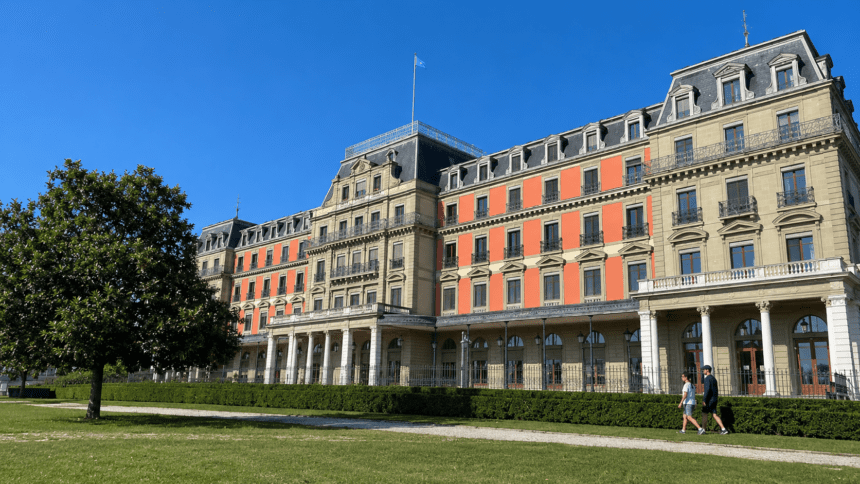
And then there is the symbolism. Reuters reported last year that a historic UN building in Geneva — one linked to the earliest modern efforts at international cooperation — could even be abandoned because of the funding squeeze. On paper, that is a property story. In reality, it lands like something else: a visible sign that the institutions which once gave Geneva its moral and political weight are being forced to shrink their footprint in the very city that helped define them.
The pressure is not coming from Washington alone. Swissinfo reported that Switzerland’s own budget cuts have added to the uncertainty for international organizations based in Geneva, including some UN-linked bodies. Europe’s broader shift toward defense spending and away from aid has also fed the sense that Geneva’s old model — big multilateral institutions, donor-backed humanitarianism, endless conference diplomacy — no longer commands the same political or financial loyalty it once did.
That does not mean Geneva is emptying out tomorrow. Far from it. The UN’s Geneva office is still active, still hosting official meetings and press briefings, and still functioning as a major diplomatic hub. But the mood has changed. The question in Geneva is no longer whether the city matters. It plainly does. The question is whether it will matter in the same way five or ten years from now, or whether parts of the UN system will steadily migrate to cheaper capitals and a leaner, less Geneva-centric future.
That is what makes this moment feel bigger than a budgeting fight. Geneva built its identity around being the place where rivals could still sit in the same room. The “city of peace” label was never just branding — it was backed by institutions, people and money. When those start to drain away, the slogan begins to sound a little haunted.