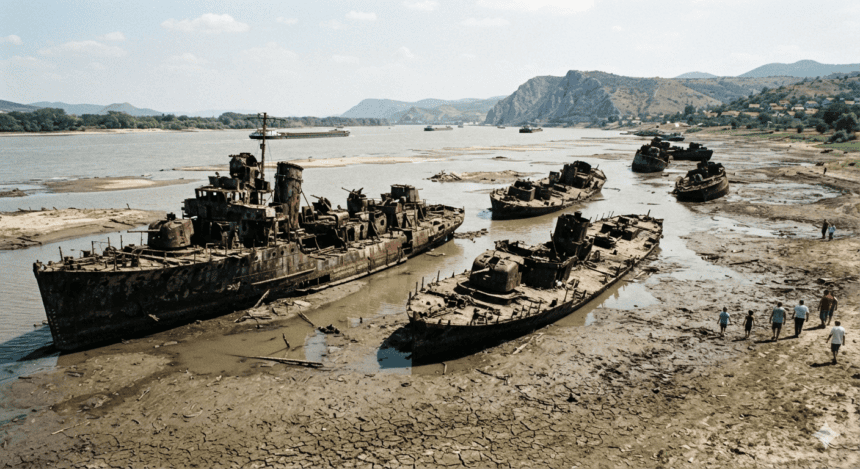
The Danube’s water level has plunged to its lowest point in nearly a century, exposing the rusted, jagged hulls of dozens of German warships. The vessels, sunk by the Nazi Black Sea fleet in 1944 as they retreated from advancing Soviet forces, have long been buried under thick river silt near the Serbian town of Prahovo.
The wrecks are more than just a historical curiosity. They are a navigational hazard and an environmental threat. As the river recedes, the ships—many still laden with unexploded mines and ammunition—have narrowed the navigable channel by nearly half. This creates a dangerous bottleneck for commercial vessels moving cargo through one of Europe’s most vital waterways.
Local fishermen and boat captains have navigated these waters for decades with caution, but the current exposure is unprecedented. The steel skeletons, some with turrets and command bridges still visible above the waterline, serve as a stark reminder of the chaotic final months of World War II.
The Serbian government has faced mounting pressure to address the wreckage. Removing the ships is a complex, multi-million dollar operation involving specialized demining teams. The European Union has previously pledged support for the clearance project, citing the need to ensure safe passage for shipping, yet the project has been stalled by the sheer scale of the danger posed by the volatile explosives still trapped inside the hulls.
Beyond the logistical headache, the site is a grim archive. Historians note that the fleet was scuttled on the orders of Rear Admiral Paul-Willy Zieb to prevent the ships from falling into Soviet hands. Hundreds of sailors were evacuated, but the ships—and their deadly cargo—remained on the riverbed, slowly decaying into the sediment.
For now, the river remains a graveyard. As long as the drought persists, these remnants of the Third Reich will continue to loom over the Danube, forcing authorities to weigh the cost of a massive salvage operation against the growing risk to modern river traffic.