KARACHI: The Sindh Cabinet has approved a Rs11.2 billion package of infrastructure projects aimed at improving road networks, easing traffic congestion, and upgrading urban facilities across Karachi.
The decision was taken during a cabinet meeting chaired by Sindh Chief Minister Syed Murad Ali Shah, where members reviewed a range of development and financial matters concerning the province. The approved package forms part of the government’s broader efforts to address long-standing infrastructure challenges in the country’s largest city.
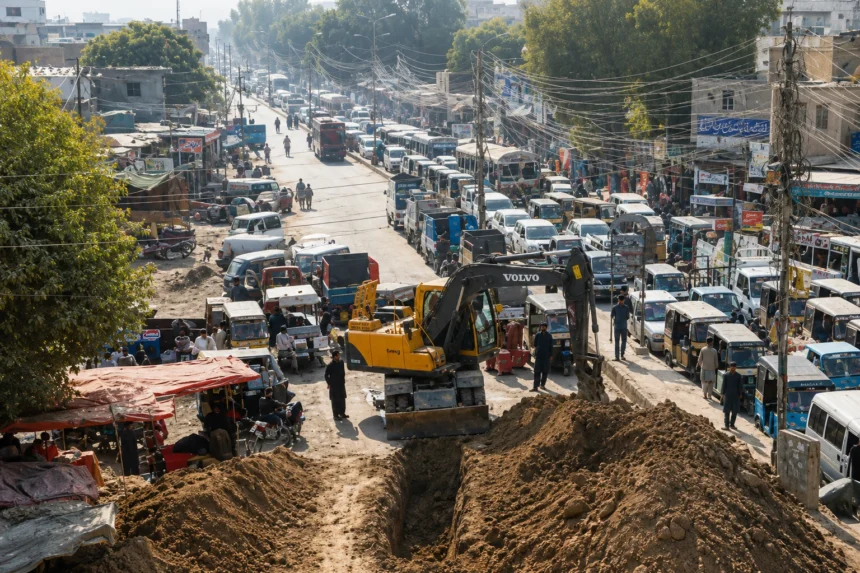
According to officials, the cabinet sanctioned 11 infrastructure schemes with a combined cost of approximately Rs11.2 billion. The projects include the reconstruction, rehabilitation, and expansion of key roads and transport corridors in different parts of Karachi to improve connectivity and facilitate smoother traffic flow.
Among the major schemes approved are development works on Haji Ibrahim Isa Road, Haji Camp Road, Korangi Link Road, several roads in Clifton, Korangi Creek Airbase Road, the expansion of Jinnah Avenue in Gulzar-e-Hijri, and the rehabilitation of Baldia Stadium Road. Authorities said these projects are expected to reduce travel time and enhance access between commercial and residential areas.
The cabinet also approved the construction of two important flyovers at Power House Chowrangi in North Karachi and 4-K Chowrangi in Surjani Town. Officials said the projects would help ease traffic bottlenecks at some of the city’s busiest intersections. An initial allocation of Rs560 million was approved to begin work on the schemes.
Speaking during the meeting, Chief Minister Murad Ali Shah reiterated the provincial government’s commitment to improving Karachi’s infrastructure and public services. He directed the relevant departments to ensure timely execution of the projects and maintain construction standards so that residents can benefit from the developments at the earliest.
The approval comes as the Sindh government accelerates efforts to modernise Karachi’s urban infrastructure and address growing concerns over traffic congestion, deteriorating roads, and increasing transportation demands in the metropolitan city.