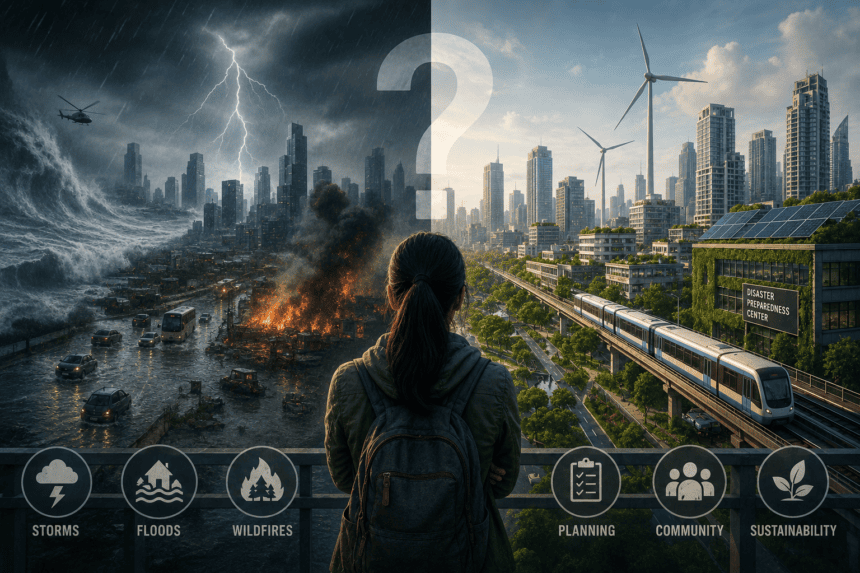
Most cities are built for the weather of the last century, not the volatile climate of the next decade. As heatwaves shatter records and flash floods turn streets into rivers, the gap between municipal disaster planning and physical reality is widening.
Engineers and urban planners are now warning that “resilience” has become a buzzword that masks a lack of structural investment. While mayors often tout green initiatives, the core infrastructure—sewer systems, power grids, and emergency transit—remains tethered to outdated climate models that no longer hold true.
Take the drainage systems in many major metropolitan hubs. Designed for predictable, seasonal rainfall, they are failing under the weight of “once-in-a-century” storms that now arrive every few years. When the water hits the pavement, it doesn’t just flood basements; it cripples power substations and cuts off medical access, turning a weather event into a public health crisis within hours.
“We’re essentially playing catch-up with physics,” says Dr. Elena Vance, a lead researcher in urban climate adaptation. “Cities are still prioritizing aesthetic ‘greening’ projects over the unglamorous, expensive work of deep-soil drainage and grid hardening. You can plant a thousand trees, but if your power grid collapses every time the temperature hits 105 degrees, you haven’t actually prepared for anything.”
The financial burden of this negligence is shifting to the taxpayer. Municipalities are increasingly relying on reactive emergency spending rather than proactive mitigation. For every dollar spent on upgrading infrastructure to withstand climate extremes, experts estimate a six-dollar saving in disaster recovery costs. Yet, the political cycle favors short-term ribbons-cutting over long-term structural overhaul.
Insurance markets are beginning to signal the danger. In several high-risk coastal and fire-prone cities, insurers are quietly pulling back, raising premiums to levels that effectively price residents out of their own neighborhoods. This “climate gentrification” is a direct result of cities failing to prove they can withstand the coming decades.
The real test for a city isn’t its disaster response plan on paper—it’s the integrity of its weakest infrastructure link. Until municipal budgets shift from surface-level optics to the heavy lifting of systemic fortification, the next major disaster won’t just be a weather event; it will be a failure of governance.