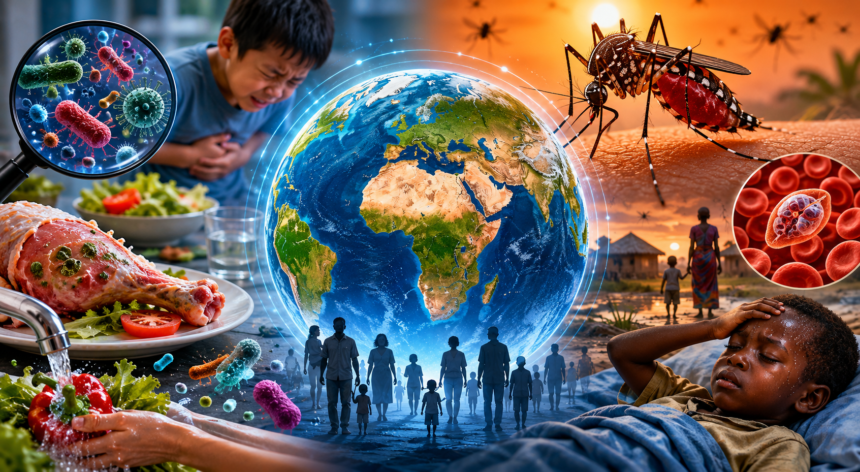
Geneva: The global burden of foodborne diseases is now considered comparable to that of malaria, according to updated estimates released by the World Health Organization (WHO). The findings highlight the significant impact of unsafe food on public health, particularly in low- and middle-income countries where food safety challenges remain widespread.
WHO estimates indicate that hundreds of millions of people fall ill each year after consuming contaminated food, resulting in substantial numbers of deaths and long-term health complications. Children under the age of five remain among the most vulnerable groups, carrying a disproportionately high share of the disease burden.
Experts say foodborne illnesses are caused by a wide range of hazards, including bacteria, viruses, parasites, toxins, and chemical contaminants. Beyond the health consequences, these diseases also create major economic losses through healthcare costs, reduced productivity, and impacts on food systems.
The updated estimates are being presented as part of activities surrounding World Food Safety Day 2026. WHO officials say the new data will help governments strengthen food safety regulations, improve surveillance systems, and invest in prevention measures across the food supply chain.
Public health experts emphasize that improving food handling, strengthening inspection systems, and increasing awareness among consumers and food producers can significantly reduce the global burden of foodborne diseases and save millions of healthy life years worldwide.