Hot weather affects both health and daily comfort, especially in cities where heat combines with humidity. The goal is to reduce body temperature, limit heat inside the home, and avoid heat-related illnesses like dehydration or heatstroke.
1. Stay Properly Hydrated:
Water helps regulate your body temperature. In extreme heat, your body loses fluids quickly through sweating.
- Drink water regularly even if you are not thirsty
- Add ORS or lemon water if sweating heavily
- Avoid too much tea, coffee, and energy drinks (they increase dehydration)
- Eat water-rich foods like cucumber, watermelon, and oranges
- Dehydration can cause dizziness, fatigue, headaches, and heatstroke.
2. Control Sunlight in Your Home:
Sunlight directly increases indoor temperature, especially through windows.
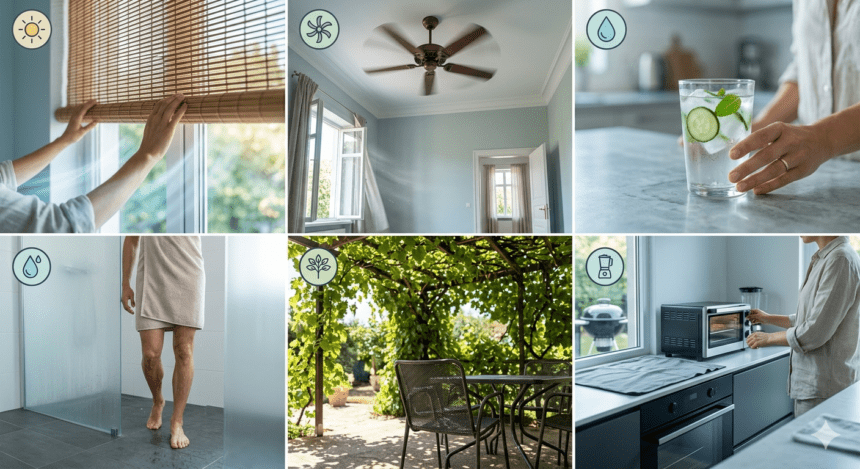
- Keep curtains or blinds closed during the day
- Use light-colored curtains (they reflect heat better)
- Cover windows with sun-blocking sheets or reflective film if possible
- Open windows at night when temperature drops
- This can reduce indoor heat significantly without using electricity.
3. Improve Air Circulation:
Stagnant air makes heat feel worse.
- Use fans to push hot air out and bring cool air in
- Open windows on opposite sides of the house for cross ventilation
- Place a bowl of ice in front of a fan for cooler airflow
- Switch off unnecessary appliances that generate heat
- Proper airflow can make a room feel several degrees cooler.
4. Wear Heat-Friendly Clothing:
Clothing directly affects how your body handles heat.
- Choose loose-fitting clothes (tight clothes trap heat)
- Wear cotton or linen fabric (they absorb sweat and allow airflow)
- Prefer light colors like white or pastel shades
- Avoid synthetic fabrics like polyester in extreme heat
- Good clothing reduces sweating and keeps the body naturally cooler.
5. Avoid Peak Heat Hours:
The sun is strongest between 12 PM and 4 PM.
- Stay indoors during peak hours
- If going outside is necessary, use an umbrella or cap
- Try to schedule work early morning or evening
- Rest in shaded or cool areas
- This is one of the most effective ways to prevent heatstroke.
6. Cool Down Your Body Quickly:
When the body overheats, immediate cooling is important.
- Take cold or lukewarm showers
- Use wet towels on neck, wrists, and forehead
- Apply ice packs on pulse points
- Soak feet in cool water for quick relief
- These areas have strong blood flow, so cooling them reduces overall body temperature faster.