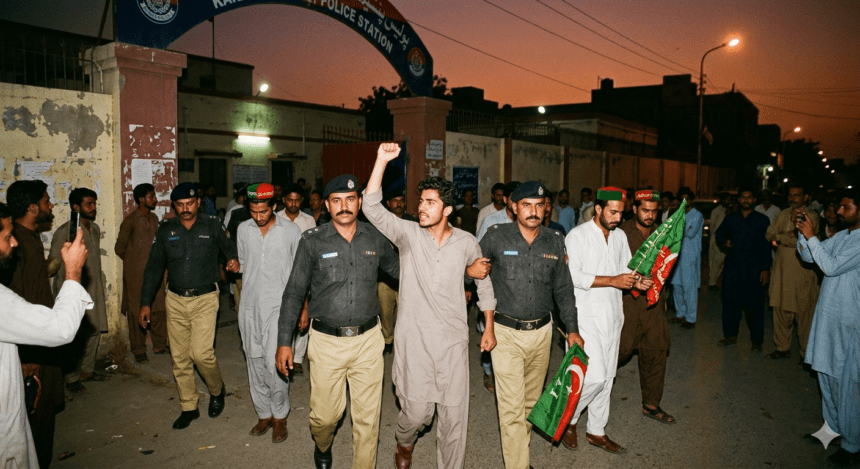
Police in Karachi arrested 11 individuals late Wednesday night for allegedly chanting slogans and waving flags in support of the Muttahida Qaumi Movement (MQM) founder, Altaf Hussain. The arrests took place in the central districts of the city, a move authorities describe as a crackdown on banned rhetoric.
Officers from the local station intercepted the group after reports surfaced of a gathering near a residential hub. Police seized several flags bearing the party’s historical insignia and promotional material linked to the London-based leadership. The suspects were taken into custody and shifted to an undisclosed location for interrogation.
The incident signals a continued hardline stance by provincial authorities toward the exiled leader. Since the August 2016 crackdown, any public display of support for the MQM founder has been treated as a violation of public order, often leading to immediate arrests under anti-terrorism or public tranquility laws.
“We won’t tolerate any attempts to disrupt the city’s peace by reviving these activities,” a senior police official said. He confirmed that investigators are currently checking the backgrounds of those arrested to determine if they have prior links to militant wings or organized political agitation.
Despite the heavy security presence in Karachi, pockets of support for the founder persist. Small, sporadic incidents — such as midnight flag-hoisting or graffiti appearing on walls — continue to trigger swift police responses. For the residents of areas like Azizabad and Liaquatabad, these arrests are a familiar sight, reflecting the lingering scars of the city’s fractured political history.
Legal experts note that the charges filed against the 11 men likely include inciting public disorder. If convicted, they face significant jail time, though defense attorneys are expected to argue that the display of political imagery does not constitute a criminal act under constitutional protections for free expression.
For now, the police maintain a heightened patrol across key districts. They expect further questioning of the detainees to reveal whether the gathering was a spontaneous act or part of a coordinated effort to test the limits of local law enforcement.