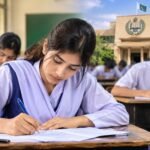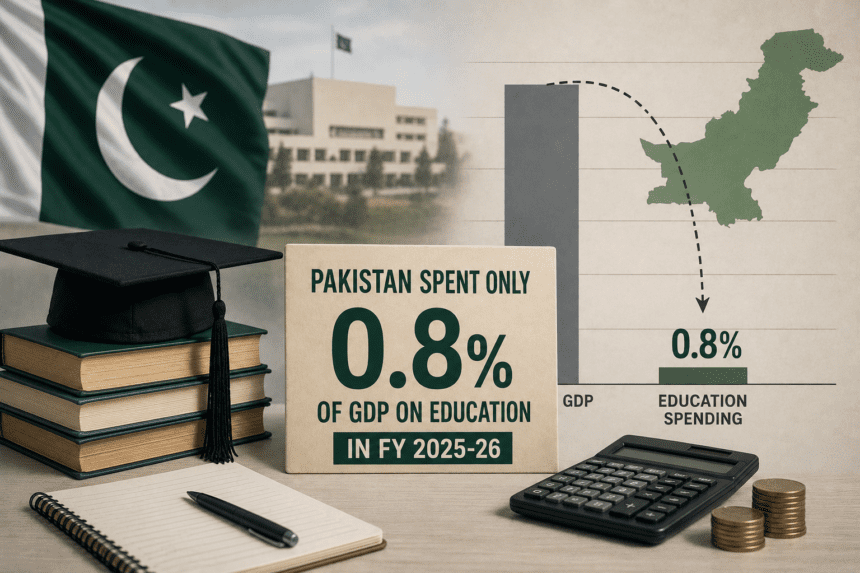
Islamabad: Pakistan allocated just 0.8% of its Gross Domestic Product (GDP) to the education sector during fiscal year 2025-26, raising concerns among education experts and policymakers about the country’s ability to meet its learning and development goals.
The latest figures indicate that education spending remains significantly below international recommendations and national targets, despite ongoing challenges such as low literacy rates, out-of-school children, inadequate school infrastructure, and shortages of trained teachers. Experts argue that greater investment is essential to improve access to quality education and address longstanding gaps in the system.
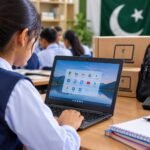
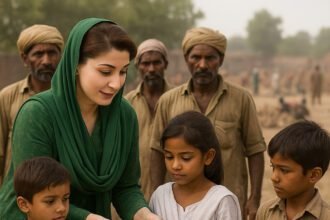
Analysts note that insufficient funding affects multiple areas of education, including classroom facilities, teacher training, digital learning resources, curriculum development, and student support programs. Rural and underprivileged communities are often the most affected by limited education budgets.
Education advocates have urged federal and provincial governments to prioritize education spending, emphasizing that investment in human capital is critical for economic growth, poverty reduction, and social progress. They argue that increased funding can help improve enrollment rates, enhance learning outcomes, and equip students with skills needed for a modern economy.
Officials maintain that efforts are continuing to strengthen the education sector through reforms, targeted initiatives, and collaboration with development partners. However, experts stress that sustained financial commitment will be necessary to achieve meaningful and long-term improvements.